



What Is Blog SEO?
Blog SEO is the process of optimizing blog content so it can rank higher in search engine results and attract more organic traffic. Think of SEO as a roadmap that helps search engines understand what your content is about and whether it deserves a place on the first page. Without SEO, even the most valuable blog post can remain invisible to readers who are actively searching for answers online.

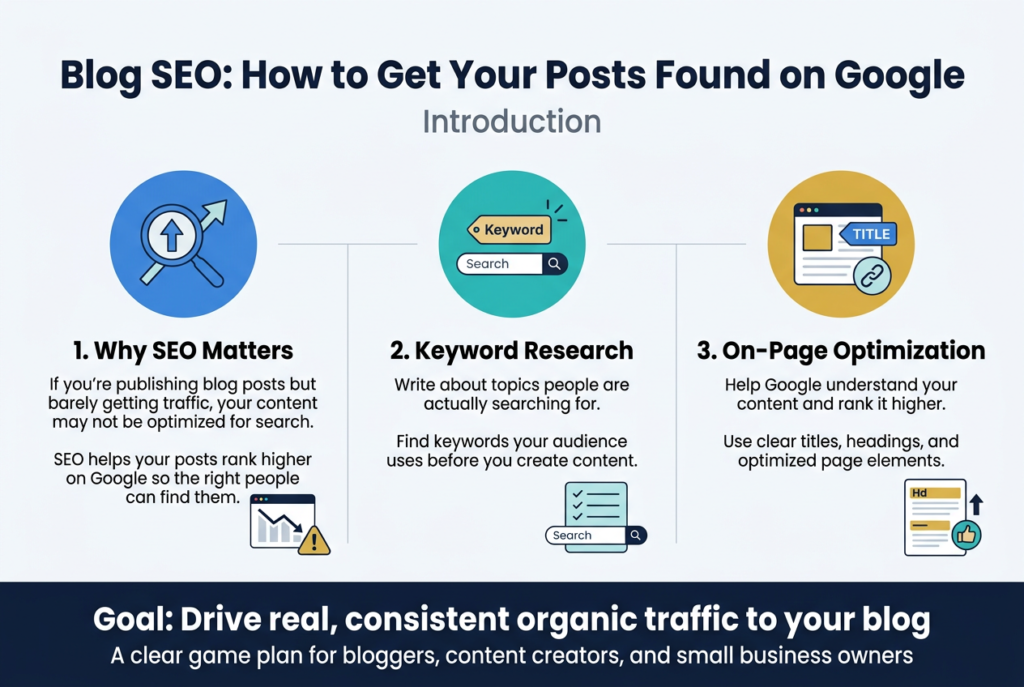
When people hear the term SEO, they often imagine complex technical tasks. In reality, successful blog SEO combines quality content, keyword optimization, user experience, and website performance. A well-optimized blog not only attracts visitors but also encourages them to stay longer, engage with the content, and return for more information. This creates a positive cycle that strengthens your rankings over time.
SEO has evolved dramatically in recent years. Search engines now prioritize content that demonstrates expertise, relevance, and value. Simply stuffing keywords into an article is no longer enough. Modern blog SEO focuses on solving real problems and providing readers with comprehensive answers that satisfy search intent.
Why Blog SEO Matters More Than Ever
The internet becomes more competitive every year. Millions of blog posts are published daily, making it increasingly difficult for new content to stand out. Blog SEO gives publishers a powerful advantage by helping their articles appear in front of the right audience at the right time.
Unlike paid advertising, organic search traffic continues delivering results long after content is published. A well-ranked article can generate visitors, leads, and sales for months or even years. This makes SEO one of the most cost-effective digital marketing strategies available today.
Another major benefit is trust. Users often perceive top-ranking search results as more credible and authoritative. When your blog consistently appears on the first page, readers are more likely to view your brand as an expert within your industry. This increased credibility can translate into stronger customer relationships and improved business growth.
Understanding How Search Engines Rank Blogs
Search engines use sophisticated algorithms to determine which content deserves top positions. The process begins with crawling and indexing, where search engine bots discover and store information about web pages. If your blog is structured properly, these bots can easily understand and categorize your content.
User experience also plays a significant role in rankings. Search engines monitor signals such as page speed, mobile friendliness, time on page, and bounce rates. If visitors quickly leave your website, search engines may interpret that as a sign your content isn’t meeting expectations.
Content quality remains one of the strongest ranking factors. Search engines reward blogs that provide original insights, accurate information, and comprehensive answers. The goal is not merely to include keywords but to create content that genuinely helps readers achieve their goals.
15 Proven Blog SEO Strategies
1. Perform Smart Keyword Research
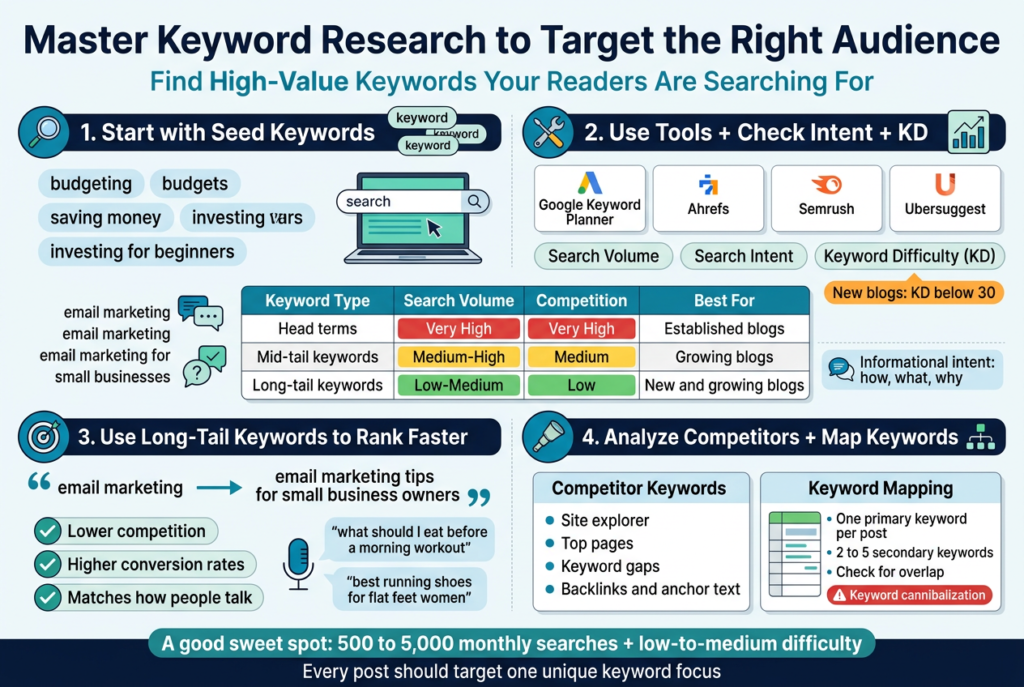
Keyword research is the foundation of every successful SEO campaign. Before writing an article, identify the terms your target audience is searching for. Focus on keywords with clear search intent and realistic competition levels.
2. Target Low-Competition Keywords
New blogs often struggle to rank for highly competitive keywords. Instead, focus on long-tail keywords that have lower competition but strong relevance. These keywords are easier to rank for and often attract highly targeted visitors.
3. Create Helpful Content
Content should solve problems, answer questions, and provide value. Search engines increasingly reward content that demonstrates expertise and satisfies user intent.
4. Optimize Title Tags
Your title is often the first thing users see in search results. Include your primary keyword naturally while making the title compelling enough to encourage clicks.
5. Write Compelling Meta Descriptions
Although meta descriptions are not a direct ranking factor, they influence click-through rates. A strong description can significantly increase traffic from search results.
6. Use Header Tags Properly
Headers improve readability and help search engines understand content structure. Use H2, H3, and H4 tags logically throughout your article.
7. Optimize Images
Images improve user engagement, but they should be optimized for performance. Compress image files and include descriptive alt text whenever possible.
8. Improve Site Speed
A slow website can hurt rankings and user experience. Optimize hosting, reduce unnecessary scripts, and compress files to improve loading times.
9. Build Internal Links
Internal links help search engines discover content while guiding visitors through your website. They also distribute authority across important pages.
10. Earn Quality Backlinks
Backlinks remain one of the strongest ranking signals. Focus on earning links from reputable websites through high-quality content and relationship building.
11. Optimize for Mobile Users
Most internet users browse on mobile devices. A responsive website design ensures a positive experience across all screen sizes.
12. Update Old Content
Refreshing outdated articles can improve rankings and maintain relevance. Update statistics, examples, and information regularly.
13. Use Schema Markup
Schema markup helps search engines understand your content better and may increase visibility through enhanced search results.
14. Focus on User Experience
Good navigation, readable formatting, and clear calls to action improve engagement and encourage visitors to spend more time on your site.
15. Track SEO Performance
Regular monitoring helps identify opportunities and weaknesses. Use analytics tools to track rankings, traffic, and user behavior.
Common Blog SEO Mistakes to Avoid
| Mistake | Impact |
|---|---|
| Keyword Stuffing | Can lead to poor rankings and reduced readability |
| Ignoring Mobile Optimization | Loses mobile visitors and ranking opportunities |
| Slow Website Speed | Increases bounce rates |
| Thin Content | Struggles to compete in search results |
| Poor Internal Linking | Reduces content discoverability |
| Not Updating Old Posts | Allows competitors to outrank your content |
One of the biggest mistakes bloggers make is focusing exclusively on search engines instead of readers. Search algorithms are designed to reward content that satisfies users. If your content provides genuine value, many SEO benefits follow naturally.
Another common issue is inconsistency. SEO is not a one-time task but an ongoing process. Publishing optimized content regularly helps establish authority and strengthens long-term visibility. Patience is critical because meaningful SEO results often take several months to appear.
Conclusion
Blog SEO remains one of the most effective ways to grow online visibility, attract targeted visitors, and build authority within your niche. The most successful blogs combine strategic keyword research, exceptional content quality, technical optimization, and a strong focus on user experience.
By implementing these 15 powerful blog SEO strategies in 2026, you can improve your chances of ranking higher in search results while creating a better experience for readers. SEO success rarely happens overnight, but consistent effort can produce remarkable long-term results that continue generating traffic and business growth for years.
FAQs
1. What is blog SEO?
Blog SEO is the process of optimizing blog content to improve visibility and rankings in search engine results.
2. How long does SEO take to work?
Most websites begin seeing noticeable SEO improvements within three to six months, depending on competition and content quality.
3. Are keywords still important in 2026?
Yes. Keywords remain essential, but they should be used naturally and aligned with search intent.
4. How often should I update blog content?
Review important articles every six to twelve months and update outdated information as needed.
5. What is the most important blog SEO factor?
Creating helpful, high-quality content that satisfies user intent remains the most important ranking factor.