


Understanding SEO Content Writing
What Is SEO Content Writing?
SEO optimized content writing is the process of creating content that ranks well in search engines while delivering real value to readers. Think of it as building a bridge between what people are searching for and the answers they need. Great SEO content doesn’t simply stuff keywords into paragraphs. Instead, it strategically uses relevant phrases, provides useful information, and creates an enjoyable reading experience.

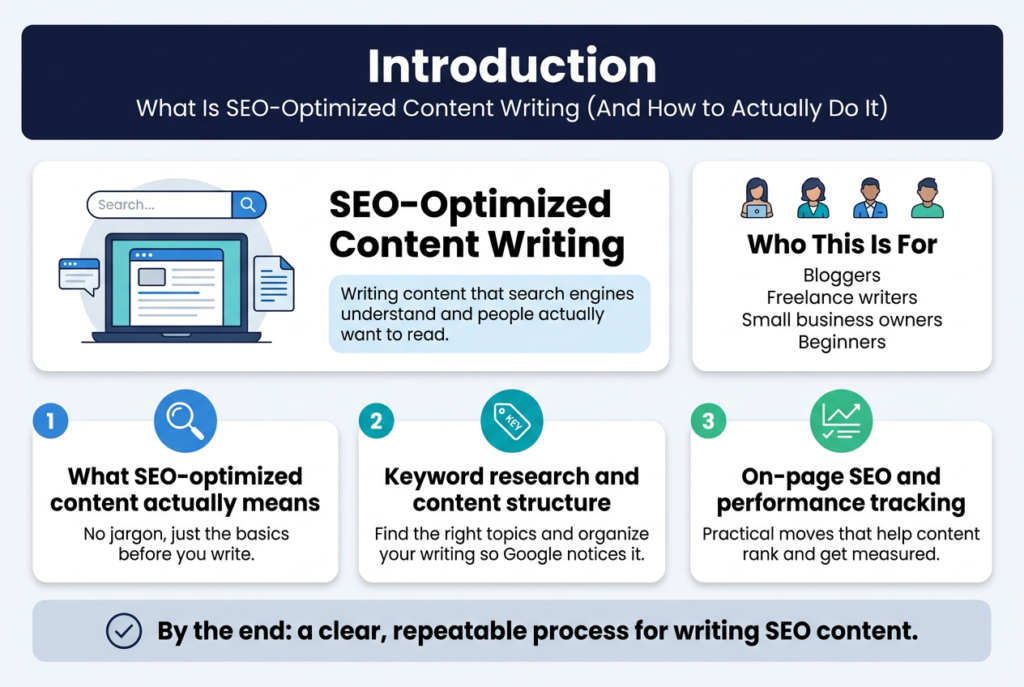
The focus keyword for this article is SEO optimized content writing, and using it naturally throughout the article helps search engines understand the topic. Search engines have become far more sophisticated than they were years ago. Today, they evaluate context, expertise, user experience, and overall content quality. That means writers must create articles that genuinely solve problems rather than simply chase rankings.
Businesses of all sizes rely on SEO content because organic traffic remains one of the most cost-effective marketing channels available. When a well-written article ranks highly, it can attract visitors for months or even years. This makes SEO content writing one of the most valuable digital marketing skills in 2026.
Why SEO Content Matters More Than Ever
The digital landscape is becoming increasingly competitive. Every day, thousands of new articles are published online. As AI tools make content creation easier, standing out requires originality, expertise, and value. Recent studies show that original content creation is considered the most effective SEO activity by professionals worldwide.
Search engines are also prioritizing helpful content that demonstrates experience and authority. Readers no longer settle for generic advice. They want practical solutions, trustworthy information, and actionable insights. This shift means content creators must focus on quality over quantity.
At the same time, AI-powered search experiences are changing how information is discovered. Content that is clear, well-structured, and authoritative has a better chance of appearing in both traditional search results and AI-generated responses.
The Evolution of SEO in 2026
Search Intent Is King
Years ago, ranking often depended heavily on keywords and backlinks. While these factors still matter, search intent has become the driving force behind successful SEO. Search engines now analyze whether content truly satisfies the user’s query.
Imagine someone searching for “best SEO content writing tips.” They aren’t looking for a dictionary definition. They want practical advice, examples, and strategies they can implement immediately. Content that fulfills this expectation is far more likely to rank well.
SEO professionals increasingly agree that content quality and intent satisfaction outperform outdated tactics. Even strong backlink profiles cannot compensate for content that fails to answer users’ questions effectively.
AI Search and Content Visibility
AI search tools are transforming the way people find information. Instead of clicking through multiple websites, users often receive direct answers generated from trusted sources. This trend has led to the rise of Generative Engine Optimization (GEO), which focuses on making content visible in AI-generated responses.
For content creators, this means clarity, authority, and structure matter more than ever. Articles should include descriptive headings, concise explanations, updated information, and evidence-backed claims. These elements make content easier for both search engines and AI systems to understand.
Tip #1 – Start With Smart Keyword Research
Finding High-Intent Keywords
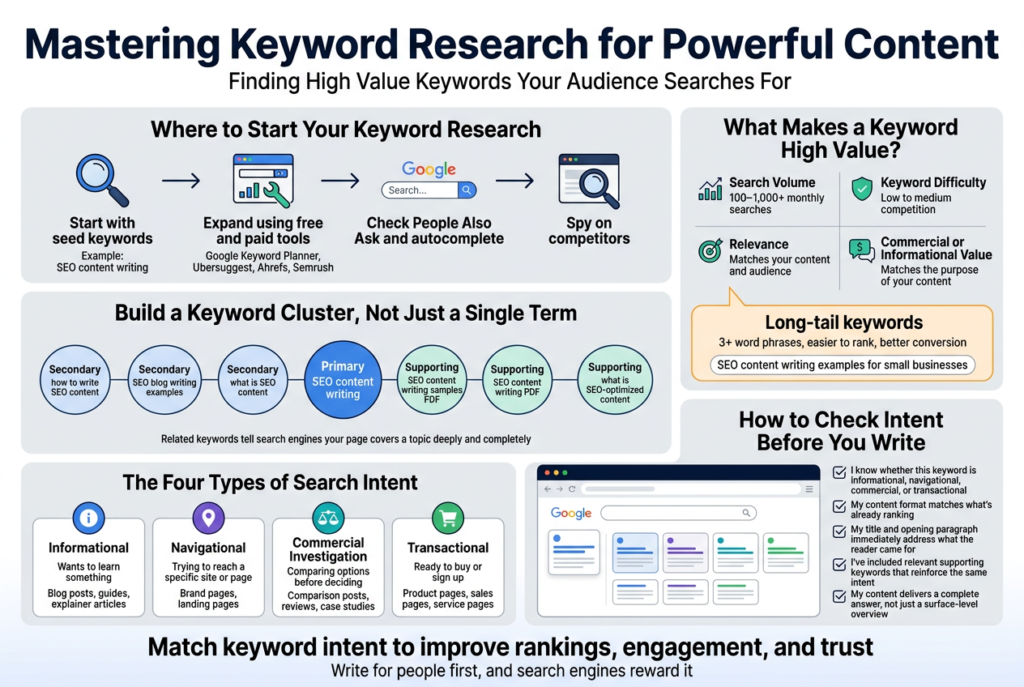
Every successful SEO strategy begins with keyword research. Without understanding what people are searching for, creating content is like sailing without a compass. Effective keyword research helps identify topics with demand, manageable competition, and strong user intent.
Focus on long-tail keywords because they often attract visitors who are closer to taking action. For example, “SEO optimized content writing for beginners” may have less competition than “SEO writing” while attracting highly targeted readers.
Keyword research tools can reveal search volume, competition levels, and related phrases. Once you identify your target keyword, incorporate it naturally into headings, introductions, and body content. The goal is relevance, not repetition.
Tip #2 – Create Content for Humans First
Balancing SEO and Readability
Many writers make the mistake of writing for algorithms instead of people. Search engines have become remarkably good at identifying content that genuinely helps readers. As a result, human-focused writing often performs better than keyword-stuffed pages.
Use conversational language and answer questions clearly. Break complex ideas into simple explanations. Imagine you’re speaking directly to a friend who wants guidance on the topic.
A helpful article should educate, engage, and inspire action. When readers spend more time on your page and find value in your content, search engines receive positive signals that can contribute to higher rankings.
Tip #3 – Optimize Content Structure
Using Headings Correctly
Well-organized content improves both readability and SEO performance. Headings create a logical hierarchy that guides readers through your article while helping search engines understand the content structure.
Use one H1 heading for the main title and organize supporting sections with H2, H3, and H4 headings where appropriate. This structure creates a better user experience and increases the chances of appearing in featured snippets.
Internal Linking Best Practices
Internal links help distribute authority throughout your website. They also encourage visitors to explore additional content. Link relevant articles together naturally and ensure anchor text accurately describes the destination page.
A strong internal linking strategy improves crawlability and helps search engines understand relationships between different pieces of content.
Tip #4 – Focus on Search Intent
Matching User Expectations
Every keyword has an underlying intent. Some users want information, while others are comparing products or looking to make a purchase. Understanding this intent is critical.
Before writing, analyze the top-ranking results for your target keyword. Are they guides, product reviews, tutorials, or listicles? Matching the dominant content format often improves ranking potential.
When your content aligns perfectly with what users expect, engagement metrics typically improve. Readers stay longer, explore more pages, and are more likely to return.
Tip #5 – Add Original Value
Building Authority and Trust
Originality is becoming one of the strongest competitive advantages in SEO. With AI-generated content flooding the internet, unique insights stand out more than ever.
Consider adding:
| Original Value Element | Benefit |
|---|---|
| Case studies | Builds credibility |
| Personal experience | Demonstrates expertise |
| Original research | Attracts links |
| Expert opinions | Increases trust |
| Unique examples | Improves engagement |
Readers remember content that offers something new. Search engines reward content that demonstrates expertise and authority.
Tip #6 – Optimize for AI Search
GEO and Modern SEO
Modern content strategies extend beyond traditional search optimization. Businesses are increasingly creating content that serves both human readers and AI systems.
To improve AI visibility:
- Use clear headings.
- Answer questions directly.
- Include factual information.
- Update statistics regularly.
- Cite credible sources.
These practices help AI systems identify and reference your content accurately.
Tip #7 – Update Content Regularly
Why Fresh Content Wins
Publishing content is only the beginning. Updating existing articles often delivers significant SEO gains. Many SEO professionals report that refreshing older content remains one of the most effective optimization strategies available.
Review articles periodically and update:
- Statistics
- Screenshots
- Examples
- Internal links
- Recommendations
Fresh content signals relevance to search engines and provides readers with current information.
Common SEO Content Writing Mistakes
Several mistakes can limit your content’s performance:
- Keyword stuffing.
- Ignoring search intent.
- Publishing thin content.
- Using outdated information.
- Neglecting internal links.
- Failing to optimize headings.
- Writing generic AI-generated content without human editing.
Avoiding these issues can dramatically improve both rankings and user satisfaction.
Best SEO Content Writing Tools
| Tool | Primary Use |
|---|---|
| Ahrefs | Keyword research and competitor analysis |
| SEMrush | SEO auditing and content planning |
| Google Search Console | Performance monitoring |
| Grammarly | Writing improvement |
| Surfer SEO | On-page optimization |
These tools can streamline your workflow and help create better content more efficiently.
Conclusion
SEO optimized content writing remains one of the most effective ways to attract organic traffic in 2026. The rules have evolved, but the core principle remains the same: create valuable content that genuinely helps people. Search engines increasingly reward originality, expertise, search intent alignment, and user satisfaction.
The most successful content creators focus on solving problems rather than chasing algorithms. By conducting thorough keyword research, optimizing content structure, adding unique insights, and keeping articles updated, you can build a sustainable SEO strategy that generates results for years to come.
As AI search continues to grow, content quality will become even more important. Businesses and creators who prioritize trust, authority, and usefulness will be best positioned to thrive in the future of search. Related Article
FAQs
1. What is SEO optimized content writing?
SEO optimized content writing is the process of creating content that ranks well in search engines while providing value to readers.
2. How often should I use my focus keyword?
Use your focus keyword naturally throughout the article, including the title, introduction, headings, and body content without overstuffing.
3. Is SEO still important in 2026?
Yes. Organic search continues to drive significant website traffic, and SEO remains a critical digital marketing strategy.
4. Can AI-generated content rank in search engines?
AI-generated content can rank if it is accurate, helpful, original, and properly edited by humans.
5. What is the ideal article length for SEO?
There is no universal length, but comprehensive content that fully satisfies search intent generally performs better than shallow articles.