



Introduction
The world of SEO keyword research ranking factors 2026 has changed dramatically from what we knew just a few years ago. Search engines have become smarter, user behavior has shifted, and the competition for visibility has grown stronger than ever. Understanding how keyword research impacts your ranking potential is no longer optional – it’s essential for any business wanting to succeed online.
Modern search engine optimization strategies require a deep understanding of how keywords work together with other ranking signals. The days of simply stuffing keywords into content and hoping for the best are long gone. Today’s approach demands a careful balance between keyword optimization and providing real value to users.

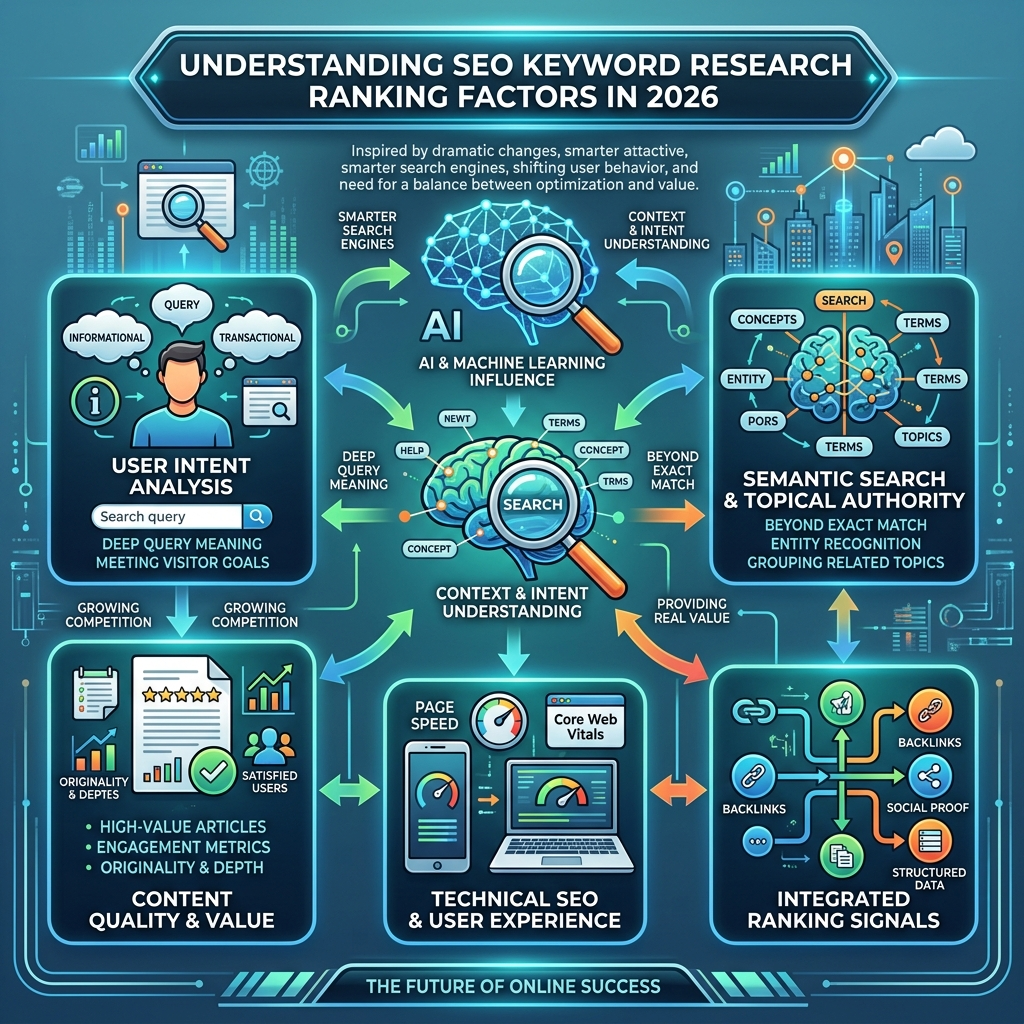
Understanding SEO Keyword Research in 2026
What Makes Keyword Research Different Today
SEO keyword research ranking factors 2026 operate in a completely different environment than before. Search engines now use artificial intelligence to understand the context and intent behind search queries. This means that exact keyword matches are less important than creating content that truly answers what people are looking for.
The modern approach to keyword analysis tools goes beyond simple search volume data. We now need to consider:
- Search intent classification – Understanding whether users want information, to make a purchase, or to find a specific website
- Semantic relationships – How related terms and concepts connect to your main keywords
- User journey mapping – Where your target keywords fit in the customer’s path to purchase
- Competitive landscape analysis – What your competitors are doing and how you can do it better
The Evolution of Search Behavior
People search differently now than they did in previous years. Voice search has grown significantly, leading to more conversational queries. Mobile searches often have different intent than desktop searches. Understanding these patterns is crucial for effective organic search optimization.
Long-tail keyword strategies have become more important because they often capture users who are closer to making decisions. Instead of competing for broad terms with millions of results, focusing on specific phrases can deliver better results with less competition.
Core Ranking Factors That Define Success
Content Relevance and Quality
The most important SEO keyword research ranking factors 2026 still revolve around creating high-quality content that matches what users want to find. Google’s algorithms have become excellent at identifying content that provides real value versus content created just for search engines.
Quality content includes:
- Comprehensive coverage of topics related to your main keywords
- Original insights and perspectives that users can’t find elsewhere
- Regular updates to keep information current and accurate
- Proper formatting that makes content easy to read and understand
User Experience Signals
Page experience optimization has become a major ranking factor. This includes everything from how fast your pages load to how easy they are to navigate. Search engines track user behavior signals like:
- Time spent on page
- Bounce rate
- Click-through rates from search results
- Return visits to your website
These signals tell search engines whether your content truly satisfies user intent for specific keywords.
Technical Foundation
Technical SEO factors create the foundation that allows your keyword optimization efforts to succeed. Without proper technical setup, even the best keyword research won’t deliver results.
Key technical elements include:
- Site speed optimization – Pages that load quickly rank better
- Mobile responsiveness – Your site must work perfectly on all devices
- Secure connections – HTTPS is now a standard requirement
- Clean URL structure – URLs should be descriptive and easy to understand
- XML sitemaps – Help search engines find and index your content
Advanced Keyword Research Techniques
Competitor Analysis Methods

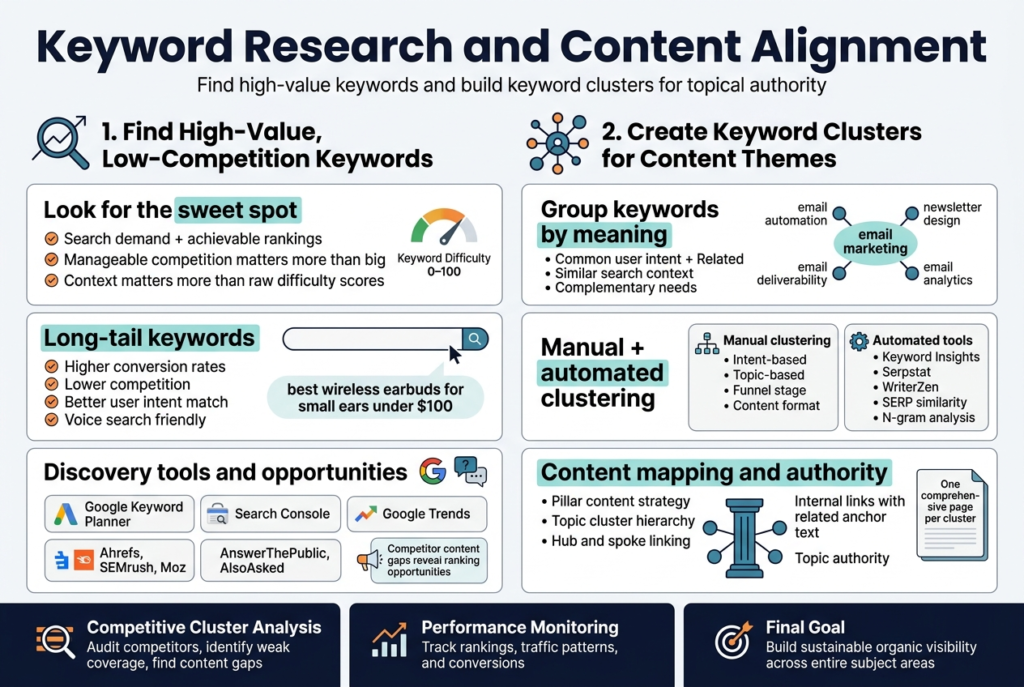
Understanding what keywords your competitors rank for gives you valuable insights into search ranking algorithms. Modern competitor analysis goes beyond just looking at their target keywords to understanding their content strategy and user experience.
Effective competitor research includes:
- Content gap analysis – Finding keywords your competitors target that you don’t
- SERP feature analysis – Understanding what types of results appear for your target keywords
- Backlink profile comparison – Seeing what sites link to your competitors
- Content quality assessment – Learning what makes their high-ranking content successful
Semantic Keyword Research
Keyword difficulty assessment now requires understanding semantic relationships between terms. Search engines recognize that different words can mean the same thing and that context matters more than exact matches.
Modern semantic research involves:
- Topic cluster development – Grouping related keywords around main themes
- Intent-based grouping – Organizing keywords by what users want to accomplish
- Natural language processing – Understanding how people actually talk about your topics
- Question-based research – Finding the questions your audience asks
Data-Driven Decision Making
SERP analysis techniques help you understand what search engines consider most relevant for specific keywords. This analysis should guide your content creation and optimization decisions.
Important metrics to track include:
- Keyword ranking positions over time
- Search volume trends and seasonal patterns
- Competition levels for different keyword variations
- Conversion rates from different keyword sources
Technical SEO Elements
Site Architecture and Navigation
Your website’s structure plays a crucial role in how well your SEO keyword research ranking factors 2026 perform. Search engines need to easily understand your site’s organization and find all your important pages.
Best practices for site architecture:
- Logical hierarchy – Organize content in a clear, logical structure
- Internal linking – Connect related pages to help users and search engines navigate
- Breadcrumb navigation – Show users where they are in your site structure
- Category organization – Group similar content together
Page Speed and Performance
Core Web Vitals have become official ranking factors, making page speed optimization essential. Users expect fast-loading pages, and search engines reward sites that deliver good experiences.
Performance optimization includes:
- Image optimization – Compress images without losing quality
- Code minification – Remove unnecessary code that slows down loading
- Caching strategies – Store frequently accessed data for faster delivery
- Content delivery networks – Serve content from servers closer to users
Mobile Optimization
Mobile-first indexing means Google primarily uses the mobile version of your site for ranking decisions. This makes mobile optimization crucial for keyword ranking success.
Mobile optimization requirements:
- Responsive design – Pages that adapt to different screen sizes
- Touch-friendly navigation – Buttons and links that work well on touchscreens
- Fast mobile loading – Mobile pages should load even faster than desktop
- Mobile-specific features – Take advantage of mobile capabilities when appropriate
Content Quality and User Intent
Understanding Search Intent
Search intent optimization requires understanding the different types of queries people make and what they expect to find. The four main types of search intent are:
- Informational – Users want to learn something
- Navigational – Users want to find a specific website
- Commercial – Users are researching products or services
- Transactional – Users are ready to make a purchase
Content Depth and Authority
Content marketing SEO success comes from creating comprehensive resources that thoroughly cover topics related to your keywords. Shallow content rarely ranks well in competitive search results.
High-quality content characteristics:
- Comprehensive coverage – Address all aspects of your topic
- Expert insights – Provide information that demonstrates expertise
- Regular updates – Keep content current and accurate
- User-friendly formatting – Use headings, lists, and images to improve readability
Featured Snippets and SERP Features
Featured snippet optimization can dramatically increase your visibility in search results. These special result types appear above regular listings and can drive significant traffic.
Common SERP features to optimize for:
- Featured snippets – Direct answers to questions
- Local packs – Business listings for location-based searches
- Image packs – Groups of related images
- Video results – Relevant video content
- People Also Ask – Related questions users commonly search
Link Building and Authority Signals
Quality Over Quantity
Link building strategies for 2026 focus on earning high-quality links from relevant, authoritative sources. The days of buying links or participating in link schemes are long gone and can actually hurt your rankings.
Effective link building approaches:
- Content-driven outreach – Create valuable content that others want to link to
- Relationship building – Develop genuine relationships with industry influencers
- Guest posting – Write for reputable sites in your industry
- Resource page inclusion – Get listed on relevant resource pages
Internal Link Optimization
Internal linking strategies help search engines understand your site structure and distribute ranking power throughout your pages. Strategic internal linking can significantly improve keyword rankings.
Internal linking best practices:
- Descriptive anchor text – Use relevant keywords in link text
- Logical connections – Link to related, helpful content
- Deep linking – Link to important pages beyond your homepage
- Regular audits – Check for broken links and optimization opportunities
Local SEO Considerations
Local Keyword Research
Local SEO ranking factors require a different approach to keyword research. Local searches often include geographic modifiers and have different intent than general searches.
Local keyword optimization includes:
- Geographic modifiers – Include city, state, or region names
- Local service terms – Use language your local audience understands
- Competitor analysis – Study other local businesses in your area
- Voice search optimization – Consider how people ask for local information
Google My Business Optimization
Your Google My Business listing significantly impacts local search visibility. Proper optimization can help you rank for local keyword searches even when your website might not rank for general terms.
GMB optimization elements:
- Complete profile information – Fill out all available fields
- Regular updates – Post updates and respond to reviews
- Local keywords – Include relevant local terms in your description
- Customer reviews – Encourage and respond to customer feedback
Mobile-First and Core Web Vitals
Mobile User Experience
Mobile SEO best practices have become essential as mobile searches continue to grow. Your mobile experience directly impacts how well your keywords rank in search results.
Mobile experience factors:
- Page load speed – Mobile pages must load quickly
- Touch-friendly design – Easy to use on touchscreen devices
- Readable text – No need to zoom to read content
- Easy navigation – Simple, intuitive menu structure
Core Web Vitals Metrics
Core Web Vitals optimization focuses on three specific metrics that Google uses to measure user experience:
- Largest Contentful Paint (LCP) – How quickly the main content loads
- First Input Delay (FID) – How responsive the page is to user interactions
- Cumulative Layout Shift (CLS) – How stable the page layout is while loading
AI and Machine Learning Impact
Algorithm Updates and Trends
Google algorithm updates continue to refine how search engines evaluate content quality and keyword relevance. Staying current with these changes is essential for maintaining rankings.
Recent algorithm focus areas:
- Content quality assessment – Better identification of helpful, reliable content
- User experience signals – Increased importance of page experience metrics
- Spam detection – More sophisticated identification of manipulative techniques
- Local search improvements – Better understanding of local search intent
Future-Proofing Your Strategy
SEO strategy planning for 2026 and beyond requires focusing on fundamentals that are unlikely to change rather than trying to game the system.
Long-term success factors:
- User-focused content – Always prioritize what users want
- Technical excellence – Maintain a fast, secure, accessible website
- Brand building – Develop recognition and trust in your industry
- Continuous improvement – Regularly update and improve your approach
Tools and Resources
Essential SEO Tools
Keyword research tools have evolved to provide more sophisticated insights into search behavior and competition. The best tools now integrate multiple data sources to provide more accurate information.
Recommended tool categories:
- Keyword research platforms – For finding and analyzing keyword opportunities
- Technical SEO tools – For identifying and fixing technical issues
- Analytics platforms – For tracking performance and user behavior
- Content optimization tools – For improving content quality and relevance
Free vs. Paid Options
Many effective SEO tools comparison options are available at different price points. While paid tools often provide more features, free tools can still provide valuable insights for smaller businesses.
Free tool options:
- Google Search Console
- Google Analytics
- Google Keyword Planner
- Bing Webmaster Tools
Paid tool benefits:
- More comprehensive data
- Advanced analysis features
- Competitive intelligence
- Historical data tracking
Common Mistakes to Avoid
Keyword Stuffing and Over-Optimization
Keyword density optimization should focus on natural usage rather than hitting specific percentage targets. Over-optimization can actually hurt your rankings and user experience.
Common over-optimization signs:
- Using keywords unnaturally in content
- Repeating exact keywords too frequently
- Ignoring synonym and related terms
- Focusing on keywords instead of user value
Ignoring User Intent
User experience ranking factors become more important each year. Creating content that perfectly matches keyword search intent is more valuable than exact keyword matching.
Intent matching strategies:
- Research what users expect to find
- Analyze top-ranking content for insights
- Test different content approaches
- Monitor user behavior signals
Technical Issues
Website optimization mistakes often prevent even great keyword research from delivering results. Regular technical audits help identify and fix issues that hurt performance.
Common technical problems:
- Slow loading speeds
- Mobile compatibility issues
- Broken links and errors
- Poor site structure
Conclusion
Understanding SEO keyword research ranking factors 2026 requires balancing traditional optimization techniques with modern user experience requirements. The most successful approach focuses on creating genuinely helpful content that naturally incorporates relevant keywords while providing an excellent user experience.
Success in modern SEO comes from understanding that keywords are just one part of a larger strategy that includes technical excellence, quality content, and strong user signals. The businesses that succeed are those that focus on serving their users well while following SEO best practices.
Search engine optimization success in 2026 and beyond will continue to reward those who prioritize user value over search engine manipulation. By focusing on quality, relevance, and user experience, you can build a sustainable SEO strategy that delivers long-term results.
The key to success is staying informed about changes in the industry while maintaining focus on the fundamentals that drive real results. Remember that the best SEO strategy is one that helps users find exactly what they’re looking for when they search for your target keywords.
What aspects of SEO keyword research ranking factors 2026 do you find most challenging? Share your experiences and questions in the comments below to continue the conversation about modern SEO success.