
Search engine optimization has changed dramatically over the past few years. Ranking a page is no longer just about inserting the right keyword a dozen times or building hundreds of backlinks. Today, keyword search intent has become one of the strongest signals that determines whether your content deserves to rank. Google wants to deliver the most relevant answer to every search query, and that means understanding what the user actually wants—not simply matching words on a page.
Recent industry research shows that AI-powered search experiences are transforming how people search online. AI Overviews now appear on a significant portion of informational searches, and many searches end without users clicking a website. This makes matching user intent even more important because the pages that satisfy searchers completely are the ones most likely to earn visibility and clicks.
Whether you’re running a blog, affiliate website, eCommerce store, or business website, understanding search intent can dramatically improve your rankings, increase organic traffic, and boost conversions. This guide explains everything you need to know about keyword search intent and how to use it to create content that both search engines and readers love.
What Is Keyword Search Intent?
Keyword search intent, often called user intent, refers to the primary goal behind a search query. Every time someone types a keyword into Google, Bing, or another search engine, they have a specific objective. They may want to learn something, compare products, visit a particular website, or make a purchase immediately.
Search engines have become incredibly sophisticated at recognizing these goals. Instead of matching keywords literally, Google evaluates the overall meaning behind the query and selects pages that best satisfy that need. This explains why two pages targeting the exact same keyword can perform very differently. One page may perfectly answer the user’s question, while another may miss the purpose entirely.
Think of search intent as a conversation. If someone asks, “best budget laptops for students,” they are not looking for the history of laptops. They want recommendations, comparisons, pricing, and buying advice. Creating content that matches that expectation is what modern SEO is all about.
Why Search Intent Matters More Than Ever
Google’s recent AI developments have made search intent even more important than keyword density. AI-powered search results often summarize information directly on the results page, meaning only content that genuinely satisfies users has the best chance of earning clicks and long-term visibility. Industry analyses also indicate that informational searches experience much higher zero-click rates than transactional searches, making content quality and intent alignment critical.
How Google Understands User Intent
Google analyzes numerous signals to determine search intent, including keyword phrasing, historical user behavior, click patterns, page engagement, SERP features, and content quality. Machine learning systems continually evaluate which pages best satisfy users and adjust rankings accordingly. If searchers consistently click one result and remain engaged, Google sees that page as fulfilling the intended purpose.
The Four Main Types of Search Intent
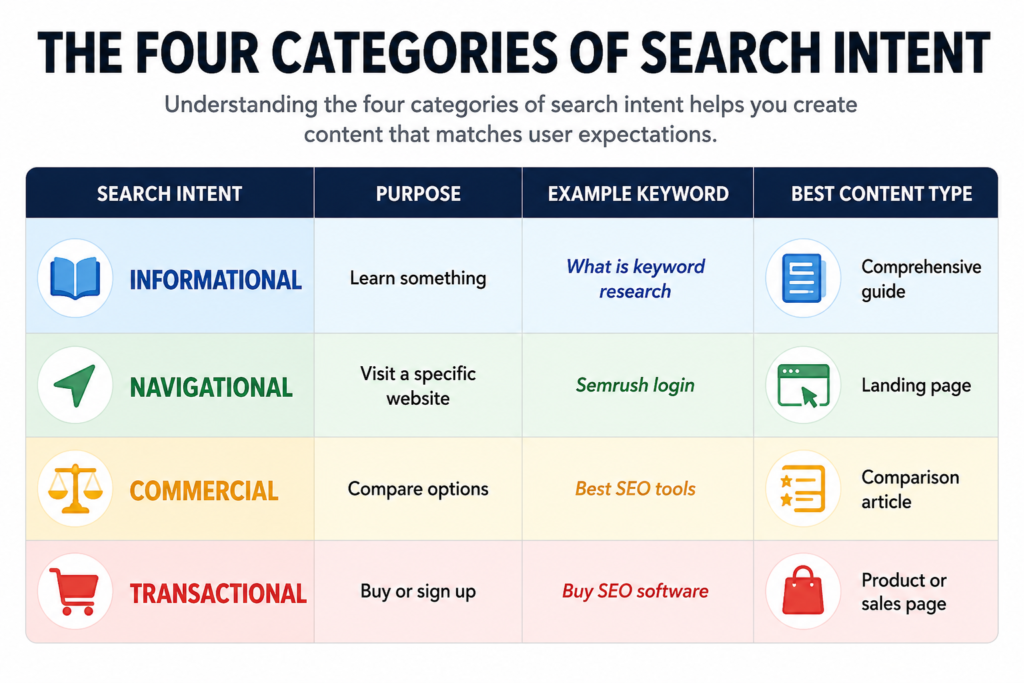
Understanding the four categories of search intent helps you create content that matches user expectations.
| Search Intent | Purpose | Example Keyword | Best Content Type |
|---|---|---|---|
| Informational | Learn something | What is keyword research | Comprehensive guide |
| Navigational | Visit a specific website | Semrush login | Landing page |
| Commercial | Compare options | Best SEO tools | Comparison article |
| Transactional | Buy or sign up | Buy SEO software | Product or sales page |
Informational Intent
Informational searches occur when users want knowledge rather than products. These queries often include words like how, what, why, guide, or tips. Educational blog posts, tutorials, and detailed explanations perform exceptionally well here.
Navigational Intent
These searches happen when users already know where they want to go. Examples include searching for a company’s homepage, login portal, or brand name. Ranking for navigational keywords typically requires strong brand authority.
Commercial Investigation Intent
Commercial intent sits between learning and buying. Users are researching products before making a purchase. Keywords often include “best,” “review,” “comparison,” or “vs.” High-quality comparison guides, case studies, and expert reviews usually dominate these search results.
Transactional Intent
Transactional searches indicate immediate buying intent. Keywords such as “buy,” “discount,” “pricing,” or “free trial” signal that users are ready to take action. Product pages, service pages, and optimized landing pages work best for these searches.
Why Search Intent Is Essential for SEO Success
Understanding keyword search intent is no longer optional if you want to build a website that consistently ranks in Google. Every search query represents a problem that someone wants solved, and Google’s primary goal is to deliver the page that provides the most satisfying answer. If your content doesn’t align with that expectation, even a well-written article with excellent backlinks may struggle to reach the first page. Search engines have evolved from simple keyword matching to sophisticated intent matching powered by machine learning and user behavior analysis.
One of the biggest reasons search intent matters is that it improves content relevance. Imagine someone searching for “how to start a blog.” They expect a step-by-step guide, not a sales page promoting web hosting. If Google notices that users quickly leave your page because it doesn’t answer their question, your rankings may decline over time. On the other hand, if readers stay on your page, continue reading, and interact with your content, Google receives positive engagement signals that indicate your page satisfies the user’s needs.
Search intent also has a direct impact on conversion rates. Visitors who land on a page that perfectly matches their expectations are much more likely to subscribe to your email list, purchase a product, click an affiliate link, or request your services. Instead of trying to persuade the wrong audience, you’re attracting people who already have the right mindset. This leads to better business results without increasing your marketing budget.
Perhaps the greatest advantage is that focusing on search intent naturally improves the overall user experience. Instead of creating content for search engines alone, you begin writing for real people. Your articles become easier to read, more useful, and more likely to earn backlinks and social shares. That combination of satisfied readers and positive engagement creates a powerful cycle that strengthens your SEO over time.
Better Rankings
When your content matches search intent, Google is more likely to rank it because it solves the user’s problem. Ranking algorithms increasingly reward pages that demonstrate relevance rather than pages that simply repeat keywords.
Higher Conversion Rates
Visitors arriving from high-intent keywords are often closer to making a decision. Whether your goal is affiliate commissions, product sales, or lead generation, matching intent increases the likelihood of conversions.
Improved User Experience
Content that answers questions clearly keeps visitors engaged. Lower bounce rates, longer dwell times, and increased page interactions all contribute to stronger SEO performance.
How to Identify Search Intent
Many beginners assume they can identify search intent simply by reading a keyword, but the reality is more nuanced. Some keywords have obvious intent, while others can serve multiple purposes depending on the context. The easiest and most reliable way to determine search intent is to let Google show you. After all, Google’s current rankings represent what its algorithms believe users want.
Start by searching your target keyword in an incognito browser window. Carefully examine the first page of results. Are the top-ranking pages blog posts, product pages, videos, comparison articles, or online tools? If nearly every result is a detailed guide, Google clearly considers the keyword informational. If the results are dominated by eCommerce pages, then the keyword has transactional intent.
Pay close attention to SERP features as well. Featured snippets often indicate informational intent because Google wants to answer the question immediately. Shopping results reveal strong buying intent. Local map packs usually signal local intent, while video carousels suggest that users prefer visual explanations. These features provide valuable clues about the content format you should create.
Keyword research tools can also help identify search intent. Many premium SEO platforms now classify keywords by intent, making it easier to prioritize your content strategy. Even if you’re using free tools, combining keyword analysis with manual Google searches gives you a much clearer understanding of what searchers expect.
Analyze Google’s Search Results
The current top-ranking pages are your biggest clue. Study their structure, length, headings, media, and overall approach before creating your own content.
Study SERP Features
Featured snippets, AI Overviews, People Also Ask boxes, videos, shopping listings, and local packs all reveal Google’s understanding of user intent.
Use Keyword Research Tools
Tools like Semrush, Ahrefs, and Mangools provide intent labels and additional keyword insights that help you choose the right content type.
How to Optimize Content for Search Intent
Knowing search intent is only half the battle. The next step is creating content that fully satisfies it. Many websites identify the correct intent but still fail because their content is incomplete, outdated, or difficult to read. Great SEO content combines relevance, depth, readability, and trustworthiness into a single experience.
The first step is matching the content format. If users expect a list of recommendations, don’t publish a lengthy opinion piece. If they’re searching for a tutorial, provide step-by-step instructions. When users want product comparisons, include detailed comparison tables and honest evaluations. Matching the preferred content format immediately improves your chances of ranking.
Next, answer every important question related to the topic. Google’s “People Also Ask” section offers valuable insights into what readers want to know next. Covering these related questions naturally increases topical authority while making your article more comprehensive. Readers appreciate content that answers multiple questions without forcing them to visit another website.
Finally, update your content regularly. Search intent can evolve over time as technology changes, products improve, and user expectations shift. Refresh outdated statistics, replace broken links, improve screenshots, and expand sections that have become more important. Fresh, accurate content signals quality to both readers and search engines.
Match Content Format
Choose the format Google already favors for your target keyword, whether that’s a guide, listicle, comparison, review, or product page.
Answer Every User Question
Cover the primary topic as well as related questions to provide a complete resource that satisfies readers.
Update Content Regularly
SEO isn’t a one-time task. Regular updates keep your content relevant and aligned with changing search intent.
Common Search Intent Mistakes to Avoid
Many website owners unknowingly sabotage their SEO efforts by ignoring search intent. One of the most common mistakes is targeting high-volume keywords without considering what users actually want. Traffic alone doesn’t guarantee success if visitors aren’t looking for what your page offers.
Another frequent error is mixing multiple intents within a single page. For example, trying to create an educational guide while aggressively selling a product often confuses readers and search engines alike. Instead, dedicate each page to a single primary intent and support it with clear, focused content.
Outdated content is another major issue. Search behavior changes over time, especially in fast-moving industries like SEO, digital marketing, and technology. Articles that performed well a few years ago may no longer satisfy modern search intent. Reviewing your top-performing pages every few months ensures they continue meeting user expectations.
Finally, avoid writing solely for search engines. Keyword stuffing, repetitive headings, and unnatural language reduce readability and hurt user engagement. Always prioritize helping your audience first. When readers enjoy your content, SEO benefits naturally follow.
