

What Is SEO Article Writing?
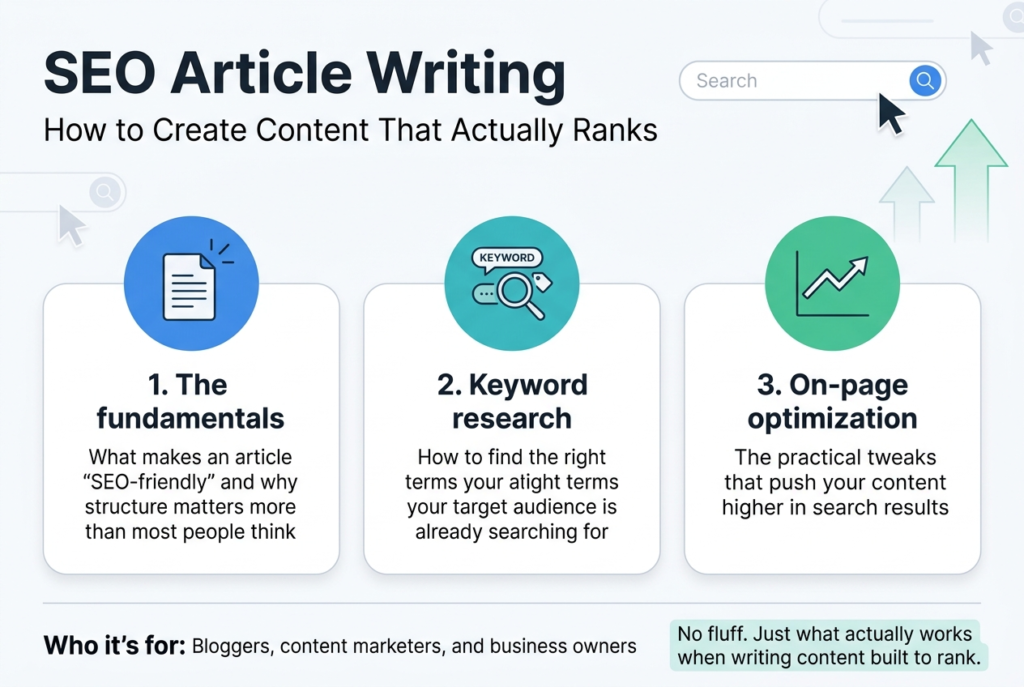
SEO article writing is the process of creating content that is designed to rank higher in search engine results while also providing genuine value to readers. Think of it as building a bridge between what people are searching for and the information they need. A successful SEO article doesn’t just target keywords; it answers questions, solves problems, and keeps readers engaged from beginning to end.
In today’s competitive digital landscape, simply publishing content is no longer enough. Millions of articles are uploaded every day, making it increasingly difficult to stand out. SEO article writing helps search engines understand your content while ensuring that readers find it useful and trustworthy. When done correctly, it can drive organic traffic, improve brand visibility, and generate consistent leads without relying heavily on paid advertising.
Why SEO Content Matters in 2026
Search engines have become smarter than ever. Modern algorithms focus heavily on content quality, user experience, expertise, and relevance. This means businesses and bloggers must prioritize helpful, well-structured content instead of relying on outdated tactics such as keyword stuffing.
SEO content matters because it creates long-term value. Unlike paid ads that stop generating traffic when your budget runs out, a well-optimized article can continue attracting visitors for months or even years. Every article you publish acts like a digital asset, working around the clock to bring potential customers and readers to your website. Related Article
Understanding Search Intent
One of the biggest secrets behind successful SEO article writing is understanding search intent. Search intent refers to the reason behind a user’s search query. Before writing any article, it’s important to ask yourself what the reader is actually looking for. Are they seeking information, comparing products, or ready to make a purchase?
There are four main types of search intent: informational, navigational, commercial, and transactional. Informational searches involve users looking for answers or guidance. Navigational searches occur when users want to find a specific website. Commercial searches indicate users are researching before making a decision, while transactional searches suggest they are ready to take action.
How Intent Affects Rankings
When your content aligns with user intent, search engines are more likely to rank it highly. This is because search engines aim to provide the most relevant and useful results. If someone searches for “how to write an SEO article,” they expect a comprehensive guide rather than a sales page.
Matching search intent improves user satisfaction, reduces bounce rates, and increases engagement metrics. These positive signals can contribute to better rankings over time. Understanding intent is like having a map before starting a journey—it guides every decision you make during the writing process.
Keyword Research Fundamentals
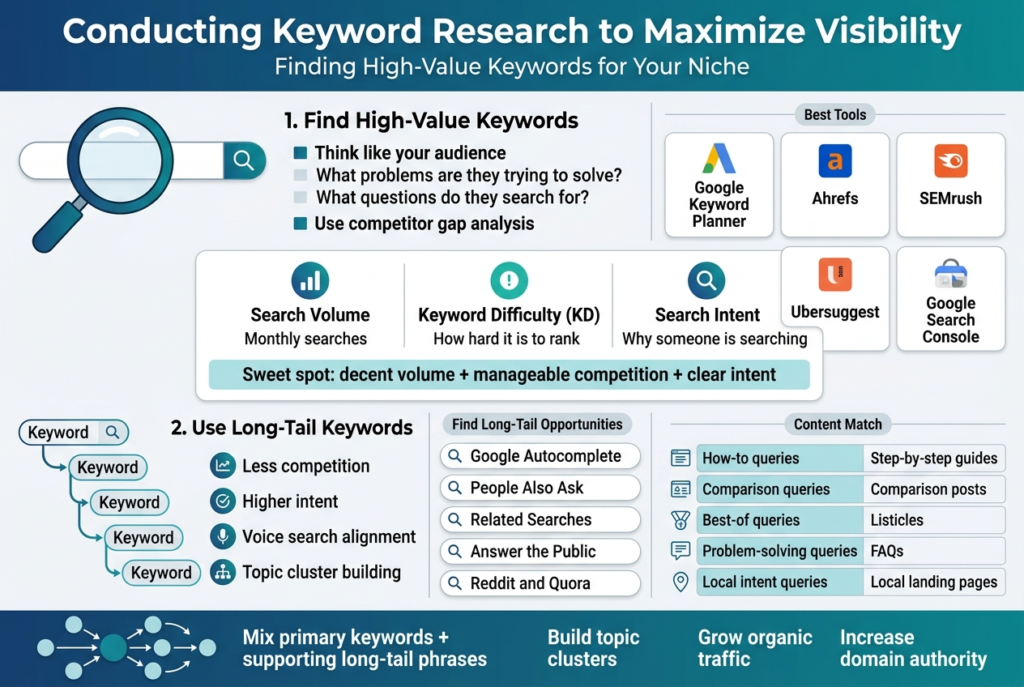
Keyword research is the foundation of every successful SEO article. Keywords help identify the topics and phrases your target audience uses when searching online. Effective keyword research allows you to create content that directly addresses user needs while increasing your chances of ranking in search results.
The best approach is to focus on a mix of primary keywords, secondary keywords, and long-tail keywords. Primary keywords represent the main topic, while secondary keywords provide supporting context. Long-tail keywords often have lower competition and higher conversion potential because they target specific search queries.
Finding the Right Keywords
Several tools can help identify valuable keywords, including Google Keyword Planner, Ahrefs, SEMrush, and Ubersuggest. When evaluating keywords, consider search volume, competition, and relevance. A keyword with moderate traffic and low competition often provides better opportunities than highly competitive terms.
Using Long-Tail Keywords Effectively
Long-tail keywords are longer, more specific search phrases that typically attract highly targeted visitors. For example, instead of targeting “SEO writing,” you might target “how to write SEO articles for beginners.” These keywords often have less competition and can drive qualified traffic that is more likely to engage with your content.
Planning an SEO-Friendly Article
Planning is often overlooked, but it plays a critical role in content success. A well-organized article is easier to write, easier to read, and easier for search engines to understand. Before you begin writing, create a detailed outline that includes your main headings, subheadings, and key discussion points.
An outline serves as a roadmap that keeps your content focused and logical. It helps ensure you cover every important aspect of the topic without unnecessary repetition. This structure also improves readability by breaking content into manageable sections.
Structuring Headings Correctly
Headings help organize content and improve user experience. Use one H1 heading for the main title, followed by H2 headings for major sections and H3 or H4 headings for supporting topics. This hierarchy makes it easier for both readers and search engines to understand your content.
Proper heading structure can also increase the likelihood of appearing in featured snippets and other enhanced search results. Clear organization signals professionalism and improves overall content quality.
Writing High-Quality Content
High-quality content remains the most important factor in SEO success. Readers visit your website because they want valuable information, not keyword-stuffed paragraphs. Your goal should be to educate, inform, entertain, or solve problems while maintaining a natural writing style.
Start with an engaging introduction that captures attention and clearly explains what readers will learn. Then develop each section with detailed explanations, examples, and actionable insights. Avoid shallow content that merely scratches the surface of a topic.
Creating Engaging Introductions
The introduction is your first opportunity to connect with readers. Ask a question, present a challenge, or share an interesting fact that encourages them to continue reading. A strong introduction sets expectations and establishes credibility.
Optimizing Readability
Readability is essential for both user experience and SEO. Use short paragraphs, simple language, and transition words to maintain flow. Break up large sections with subheadings and occasional lists when necessary. Content that is easy to read often performs better because readers stay engaged longer.
On-Page SEO Best Practices
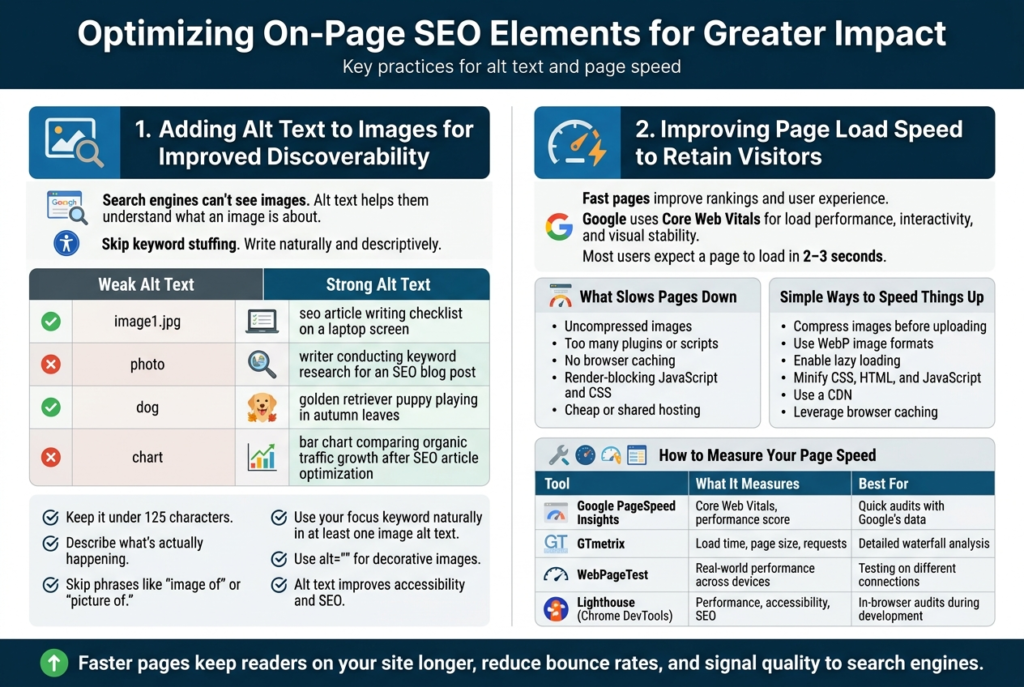
On-page SEO involves optimizing individual pages to improve search visibility. This includes title tags, meta descriptions, URL structures, image optimization, and linking strategies. These elements work together to help search engines understand your content.
Title Tags and Meta Descriptions
Your title tag is one of the most important ranking factors. It should include your primary keyword while remaining compelling enough to attract clicks. Meta descriptions provide a brief summary of the page and can influence click-through rates.
| Element | Best Practice |
|---|---|
| Title Tag | Include primary keyword naturally |
| Meta Description | Keep it engaging and concise |
| URL | Short and descriptive |
| Headings | Use keyword-rich structure |
Internal and External Linking
Internal links connect related pages on your website, helping visitors discover additional content while improving site structure. External links to authoritative sources can enhance credibility and provide additional context.
Image Optimization
Images improve user engagement but should also be optimized. Use descriptive file names, alt text, and compressed image sizes to improve page speed and accessibility.
Common SEO Article Writing Mistakes
Many writers unknowingly make mistakes that limit their content’s performance. One common issue is keyword stuffing, where keywords are repeated excessively in an attempt to manipulate rankings. This practice often creates poor user experiences and may negatively impact performance.
Another mistake is publishing thin content. Articles that lack depth or originality rarely perform well in competitive search results. Search engines prefer comprehensive resources that thoroughly address user questions.
Measuring Content Performance
Publishing content is only the beginning. Monitoring performance helps identify what’s working and where improvements are needed. Tools such as Google Analytics and Google Search Console provide valuable insights into traffic, engagement, and keyword rankings.
Important metrics include organic traffic, bounce rate, average session duration, click-through rate, and conversion rate. Tracking these indicators helps refine your content strategy and maximize results over time.
Future Trends in SEO Content Writing
The future of SEO article writing will continue evolving alongside advancements in artificial intelligence and search technology. User experience, content quality, and topical authority will remain key priorities. Writers who focus on helping readers rather than manipulating algorithms will be best positioned for long-term success.
Voice search, AI-assisted search experiences, and semantic optimization are becoming increasingly important. Content creators should focus on answering questions naturally while building comprehensive topic coverage.
Conclusion
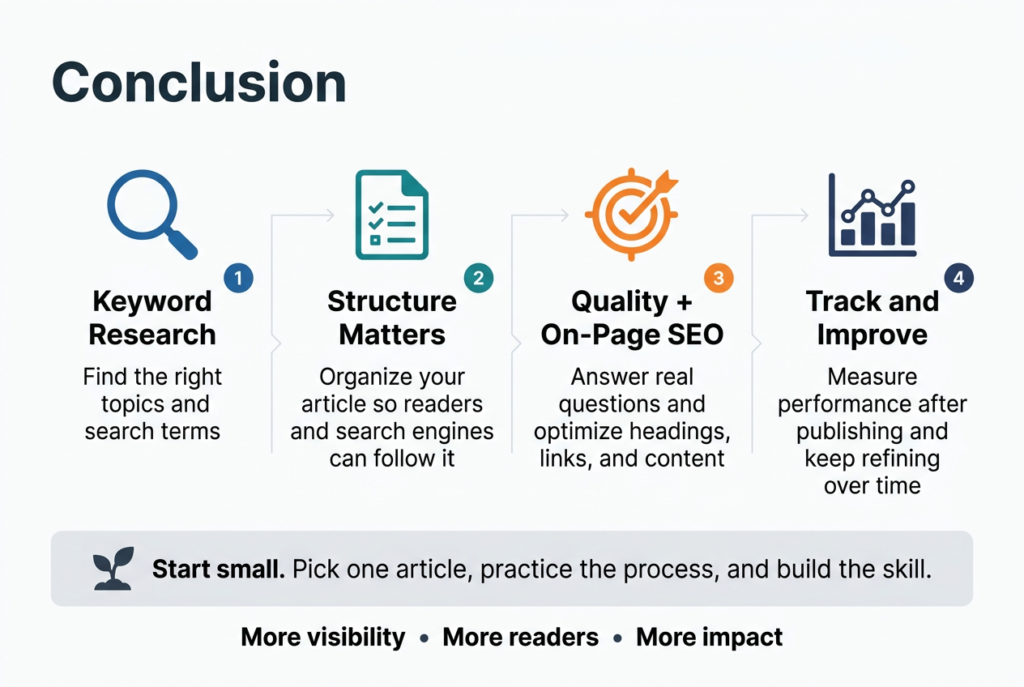
SEO article writing combines creativity, strategy, and technical optimization to create content that ranks and delivers value. By understanding search intent, conducting thorough keyword research, organizing content effectively, and prioritizing quality, you can build articles that attract readers and perform well in search engines.
The most successful SEO writers recognize that search engines ultimately reward content that helps users. When you focus on solving problems, answering questions, and creating engaging experiences, rankings often follow naturally. Treat every article as an opportunity to build trust, demonstrate expertise, and create lasting value for your audience.
FAQs
1. What is SEO article writing?
SEO article writing is the practice of creating content optimized for search engines while providing useful information to readers.
2. How long should an SEO article be?
The ideal length depends on the topic and competition, but comprehensive articles often perform better.
3. How many keywords should I use?
Focus on natural keyword placement rather than a specific number. Prioritize readability and relevance.
4. Are long-tail keywords important?
Yes. Long-tail keywords often have lower competition and attract highly targeted traffic.
5. Can AI-generated content rank on Google?
AI-assisted content can rank when it is accurate, helpful, original, and provides genuine value to users.
