

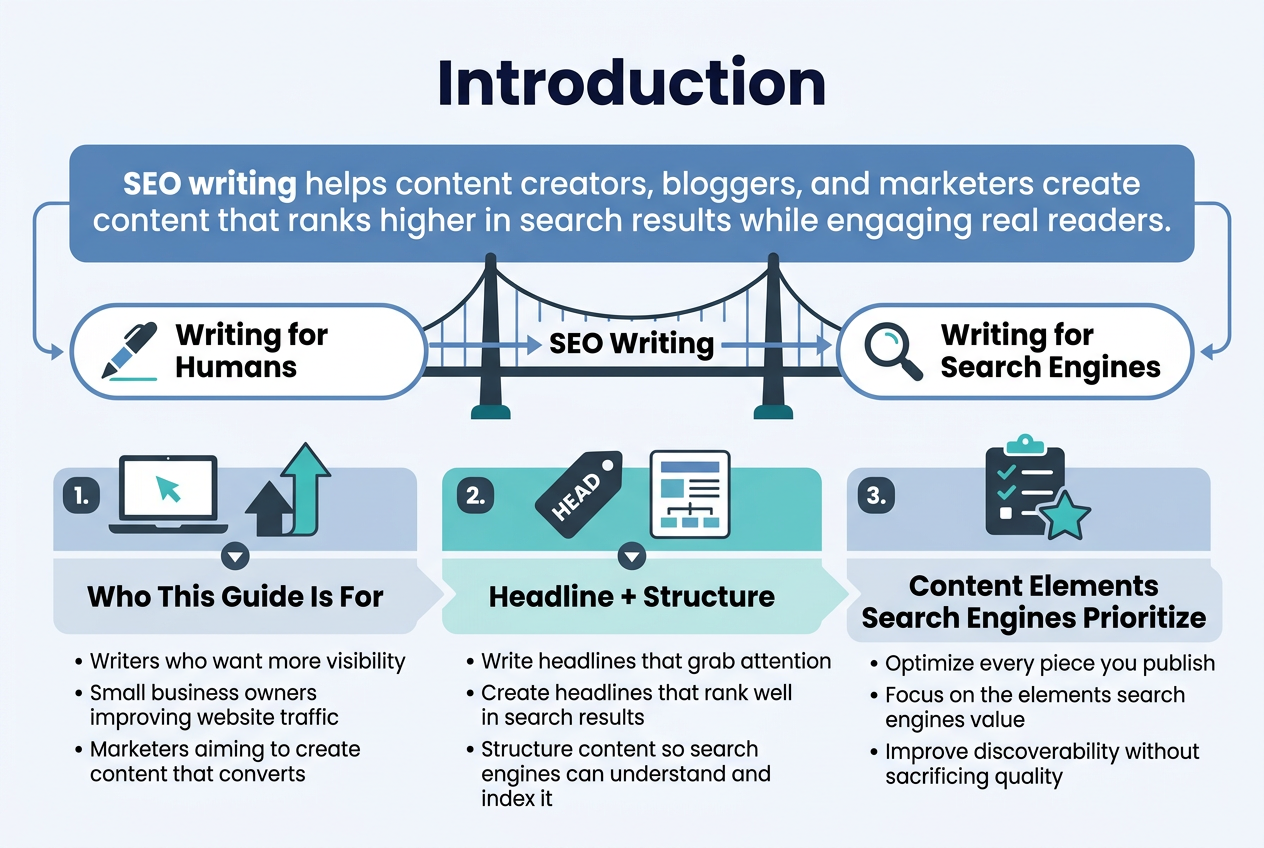
SEO writing helps content creators, bloggers, and marketers create content that ranks higher in search results while engaging real readers. This skill bridges the gap between writing for humans and writing for search engines, making your content discoverable without sacrificing quality.
This guide is perfect for writers who want to boost their content’s visibility, small business owners looking to improve their website traffic, and marketers aiming to create content that converts.
We’ll cover how to write headlines that grab attention and rank well in search results. You’ll also learn to structure your content so search engines can easily understand and index it. Finally, we’ll explore the specific content elements that search engines prioritize, helping you optimize every piece you publish.
Master the Fundamentals of SEO Writing
Understand search engine algorithms and ranking factors
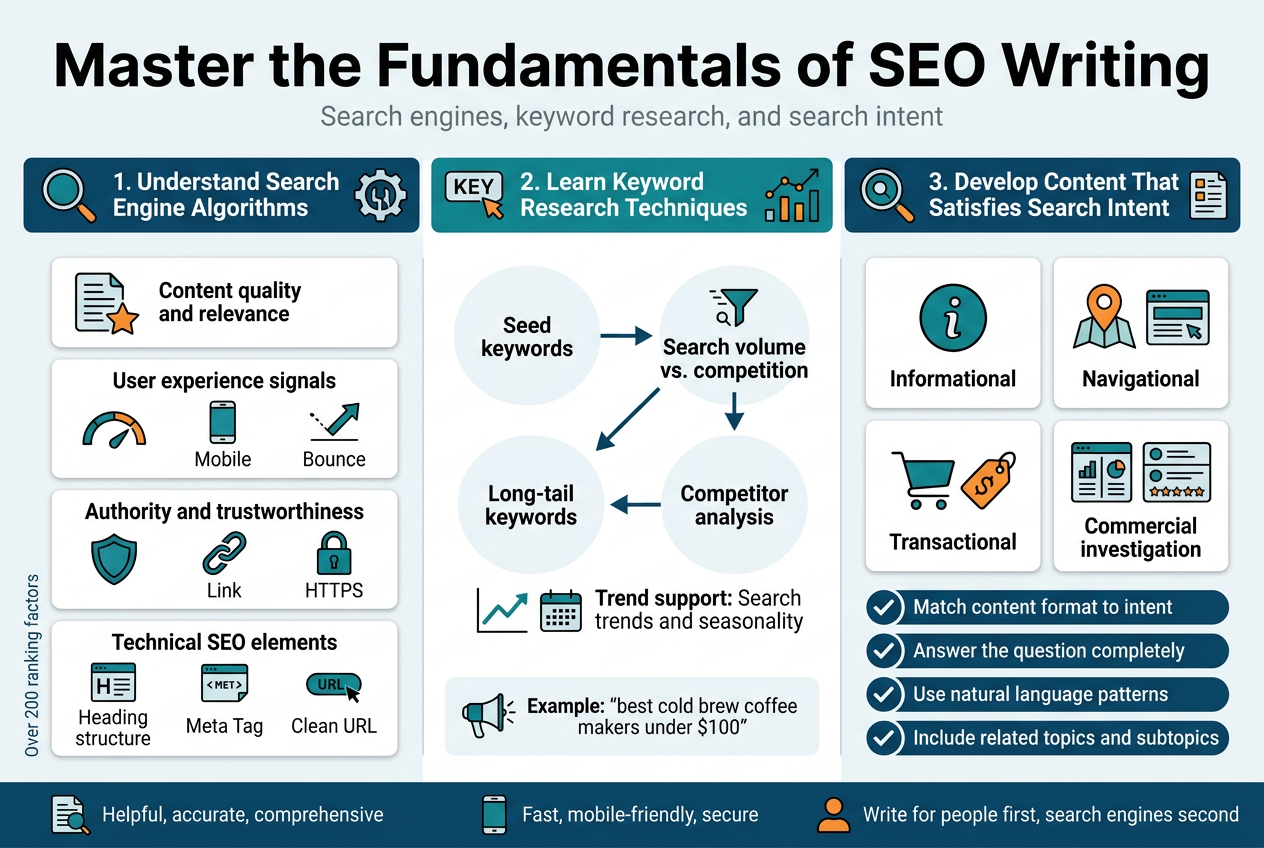
Search engines like Google use complex algorithms to decide which pages appear first in search results. These algorithms consider over 200 ranking factors, but some carry more weight than others.
Content quality and relevance sit at the top of the priority list. Google wants to show users the most helpful, accurate, and comprehensive content for their searches. This means your writing needs to genuinely answer questions and provide value, not just stuff keywords everywhere.
User experience signals play a huge role too. Page loading speed, mobile responsiveness, and how long people stay on your page all send signals about content quality. If visitors bounce away quickly, search engines interpret this as a sign your content isn’t meeting their needs.
Authority and trustworthiness matter more than ever. Search engines look at factors like:
- Quality and quantity of backlinks from reputable sites
- Author expertise and credentials
- Website security (HTTPS)
- Regular content updates
Technical SEO elements include proper heading structure, meta descriptions, and clean URL structure. While these might seem minor, they help search engines understand and categorize your content correctly.
Learn keyword research techniques that drive traffic
Effective keyword research goes beyond guessing what people might search for. Start with seed keywords related to your topic, then expand using research tools like Google Keyword Planner, Ahrefs, or SEMrush.
Search volume vs. competition creates the sweet spot for keyword selection. High-volume keywords often face intense competition from established sites. Look for medium-volume keywords with reasonable competition where you can realistically rank.
Long-tail keywords offer golden opportunities for new websites. These 3-5 word phrases have lower search volumes but higher conversion rates because they target specific user intent. Instead of targeting “coffee,” try “best cold brew coffee makers under $100.”
Competitor analysis reveals keyword gaps in your strategy. See which keywords your competitors rank for and identify opportunities they’ve missed. Tools like SpyFu or Ahrefs can show you exactly which keywords drive traffic to competitor sites.
Search trends and seasonality affect keyword performance. Google Trends helps identify rising topics and seasonal patterns. Planning content around these trends can capture traffic during peak interest periods.
Develop content that satisfies search intent
Search intent represents the real reason behind someone’s search query. Understanding this intent shapes everything about your content strategy.
Four main types of search intent guide content creation:
- Informational: Users want to learn something (“how to brew coffee”)
- Navigational: Users seek a specific website (“Starbucks locations”)
- Transactional: Users want to buy something (“buy coffee beans online”)
- Commercial investigation: Users research before buying (“best espresso machines 2024”)
Match content format to intent. Informational searches often prefer how-to guides, lists, or explanatory articles. Transactional searches need product pages with clear pricing and purchase options. Commercial investigation searches want comparison articles and reviews.
Answer the question completely. Don’t make users hunt through multiple pages for complete answers. If someone searches “how to change a tire,” include every step, required tools, and safety tips in one comprehensive guide.
Use natural language patterns that mirror how people actually speak and search. Voice search continues growing, so write content that sounds natural when read aloud. This approach often captures both traditional and voice search traffic.
Include related topics and subtopics that users might want to know. If you’re writing about “home workout equipment,” also cover topics like space requirements, budget considerations, and beginner vs. advanced options. This comprehensive approach keeps users engaged longer and signals content depth to search engines.
Structure Your Content for Maximum Search Impact
Use header tags strategically to organize information
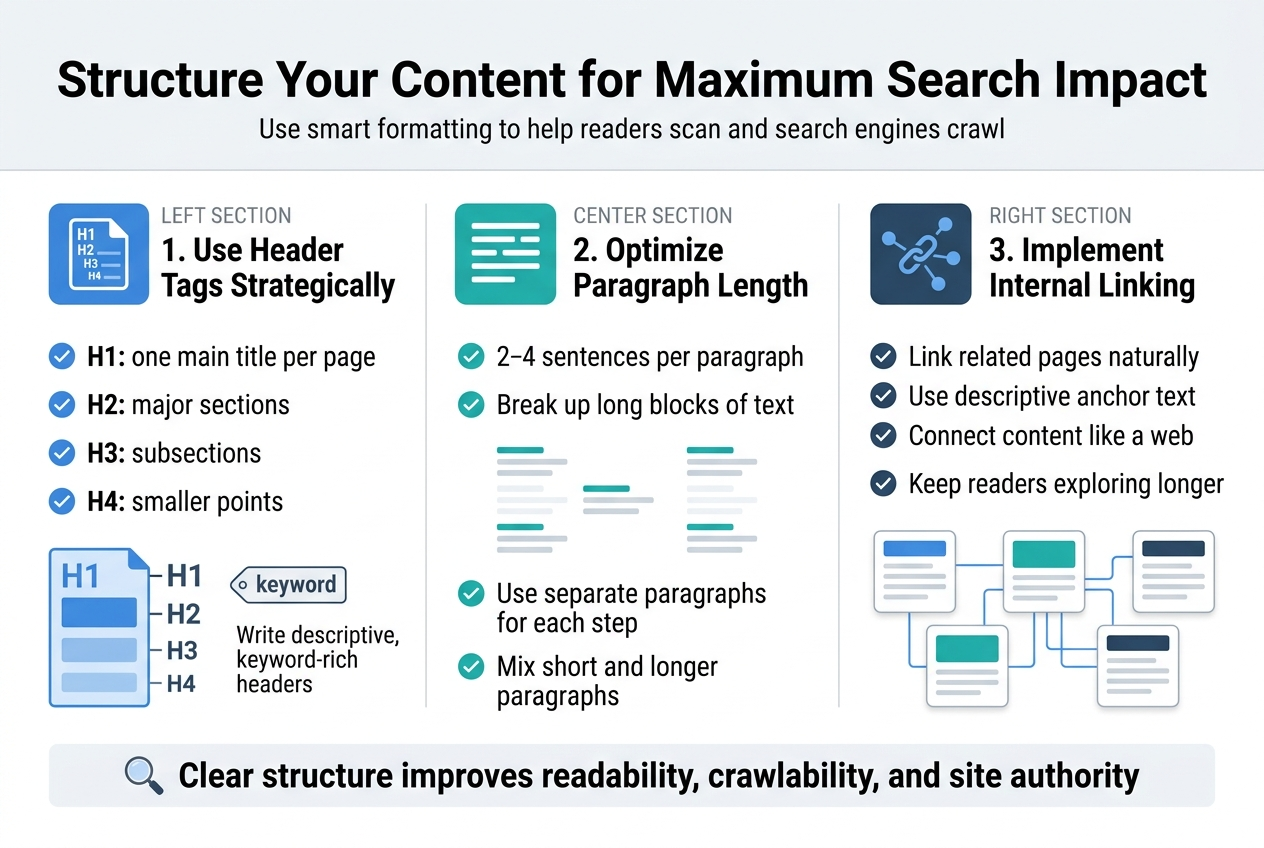
Header tags work like a roadmap for both readers and search engines. When you create content with clear H2, H3, and H4 tags, you’re telling Google exactly what each section covers and how important it is in your overall piece.
Start with one H1 tag per page – that’s your main title. Then use H2 tags for your major sections, H3 tags for subsections under those, and H4 tags for any smaller points within those subsections. This creates a logical flow that search engines love to crawl and index.
Your headers should include your target keywords naturally. Instead of writing “Benefits” as an H2, try “Benefits of Email Marketing for Small Businesses.” This approach helps search engines understand your content’s focus while making it easier for readers to scan and find what they need.
Keep headers descriptive and specific. Vague headers like “Things to Know” don’t help anyone. Better options might be “Common SEO Mistakes That Hurt Rankings” or “5 Tools for Keyword Research.” Each header should give readers a clear preview of what’s coming next.
Optimize paragraph length for better readability
Long paragraphs scare readers away faster than a pop-up ad. Online readers scan content differently than they read books, so your paragraphs need to work with their behavior, not against it.
Aim for 2-4 sentences per paragraph. This creates white space that makes your content feel less overwhelming. When readers see massive blocks of text, they often bounce to find something easier to digest.
Break up complex ideas across multiple paragraphs rather than cramming everything into one. If you’re explaining a process with several steps, give each step its own paragraph. This makes it easier for readers to follow along and understand each point clearly.
Mix up your paragraph lengths to create rhythm. Some paragraphs can be just one powerful sentence. Others might need three or four sentences to explain a concept fully. This variation keeps readers engaged and prevents your content from feeling monotonous.
Implement internal linking for improved site authority
Internal links connect your content like bridges between related topics. When you link from one page to another on your site, you’re telling search engines that both pieces of content are valuable and related.
Place internal links naturally within your content, not just at the end. When you mention a concept that you’ve covered in detail elsewhere, link to that resource. For example, if you’re writing about content marketing and mention “keyword research,” link to your comprehensive guide on that topic.
Use descriptive anchor text for your internal links. Instead of “click here” or “read more,” use phrases that describe what readers will find when they click. “Learn advanced keyword research techniques” tells both readers and search engines exactly what to expect.
Create a web of connections between your related content. If you have articles about email marketing, social media, and content creation, link between them when relevant. This helps search engines understand your site’s expertise and keeps readers exploring your content longer.
Measure and Improve Your SEO Writing Performance
Track keyword rankings and organic traffic growth
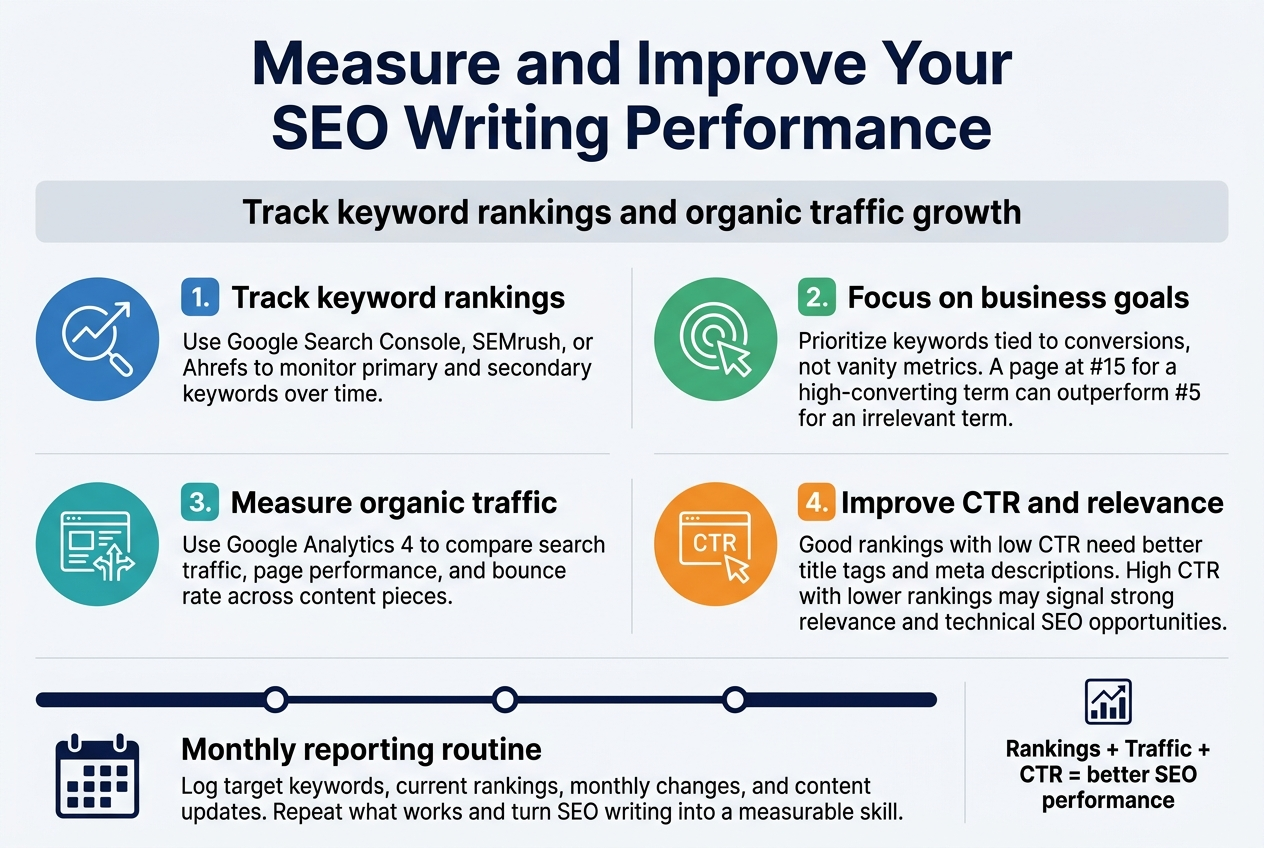
Monitoring your keyword performance gives you the real story behind your SEO writing efforts. Start by setting up tracking for your primary and secondary keywords using tools like Google Search Console, SEMrush, or Ahrefs. These platforms show exactly where your content ranks for specific search terms and how those positions change over time.
Focus on tracking keywords that directly relate to your business goals rather than vanity metrics. A page ranking #15 for a high-converting keyword often delivers better results than ranking #5 for a term that doesn’t drive qualified traffic. Create a spreadsheet or dashboard that logs your target keywords, current rankings, and monthly changes to spot trends quickly.
Organic traffic growth tells an even more complete story than rankings alone. Google Analytics 4 reveals which pages attract the most visitors from search engines and how user behavior varies across different content pieces. Look for pages that rank well but have high bounce rates – they might need content improvements to better match search intent.
Pay attention to click-through rates in Search Console data. Pages with good rankings but low CTRs often benefit from optimized title tags and meta descriptions. Conversely, pages with high CTRs but lower rankings suggest your content resonates with searchers and might climb higher with some technical SEO improvements.
Set up monthly reporting routines to track your progress consistently. Document which content changes correlate with ranking improvements, helping you replicate successful strategies across other pages. This data-driven approach transforms SEO writing from guesswork into a measurable skill that consistently delivers better results.
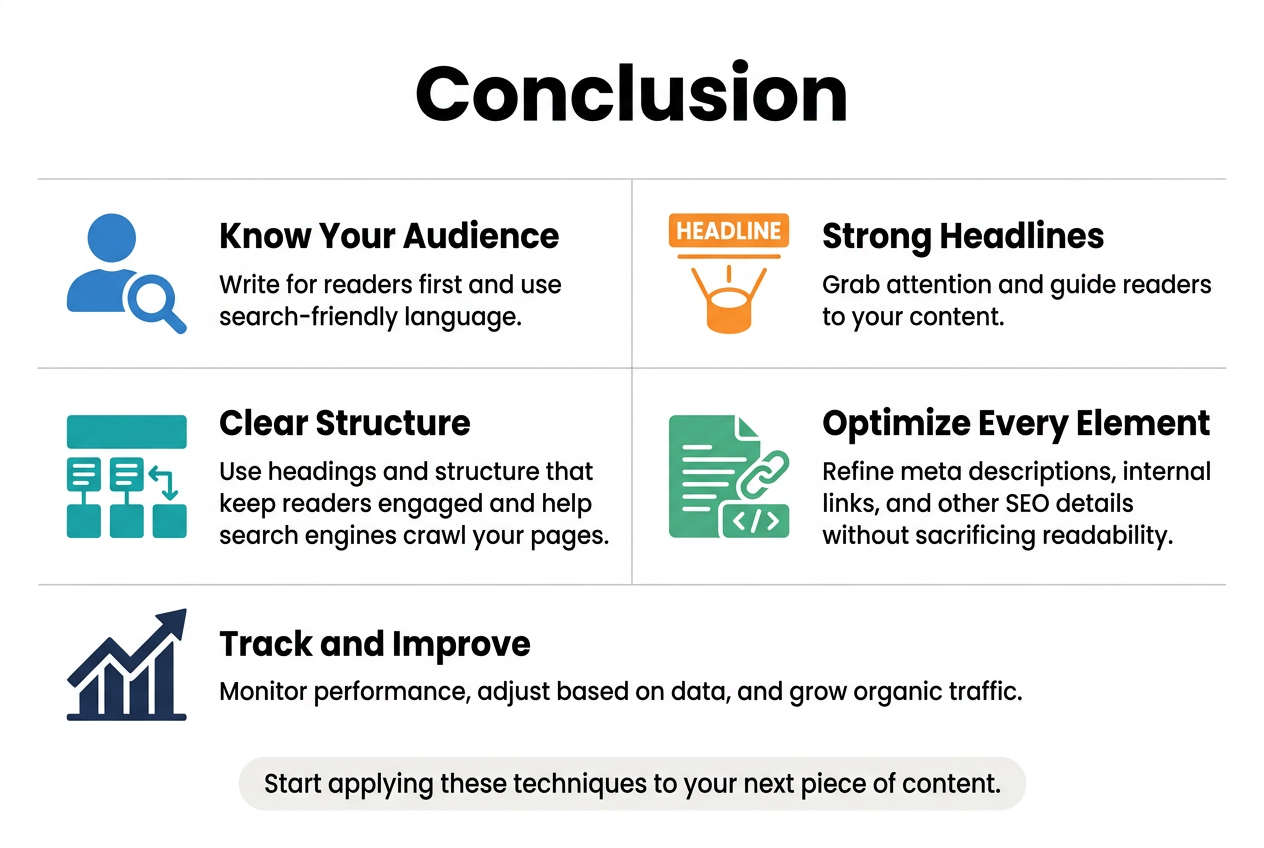
SEO writing combines the art of compelling content with the science of search optimization. Getting the fundamentals right means understanding your audience while speaking the language search engines understand. Strong headlines grab attention and guide readers to your content, while proper structure keeps them engaged and helps search engines crawl your pages effectively.
The real magic happens when you optimize every element from meta descriptions to internal links without sacrificing readability. Your content should feel natural to readers while hitting all the technical marks that boost your search rankings. Track your performance regularly and adjust your strategy based on what the data tells you. Start applying these techniques to your next piece of content and watch your organic traffic grow.

7 Responses