
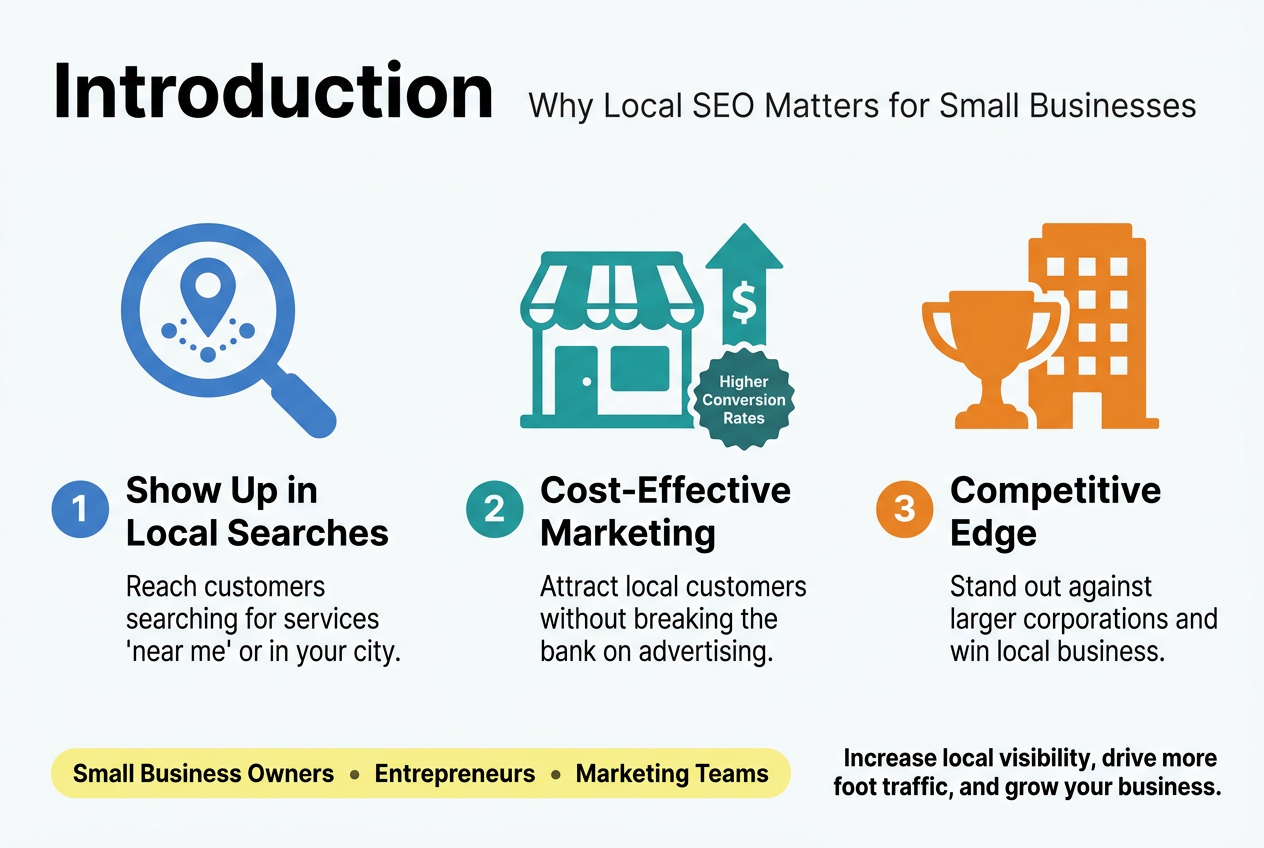
Small business owners who want more local customers walking through their doors need to understand why local SEO is important for small businesses. When potential customers search for services “near me” or in your city, local SEO helps your business show up in those crucial search results.
This guide is for small business owners, entrepreneurs, and marketing teams who want to attract more local customers without breaking the bank on advertising. We’ll explore how local SEO boosts your online visibility within your target market, delivers cost-effective marketing with higher conversion rates, and gives you a competitive edge against larger corporations that might seem impossible to beat.
Understanding Local SEO and Its Core Components
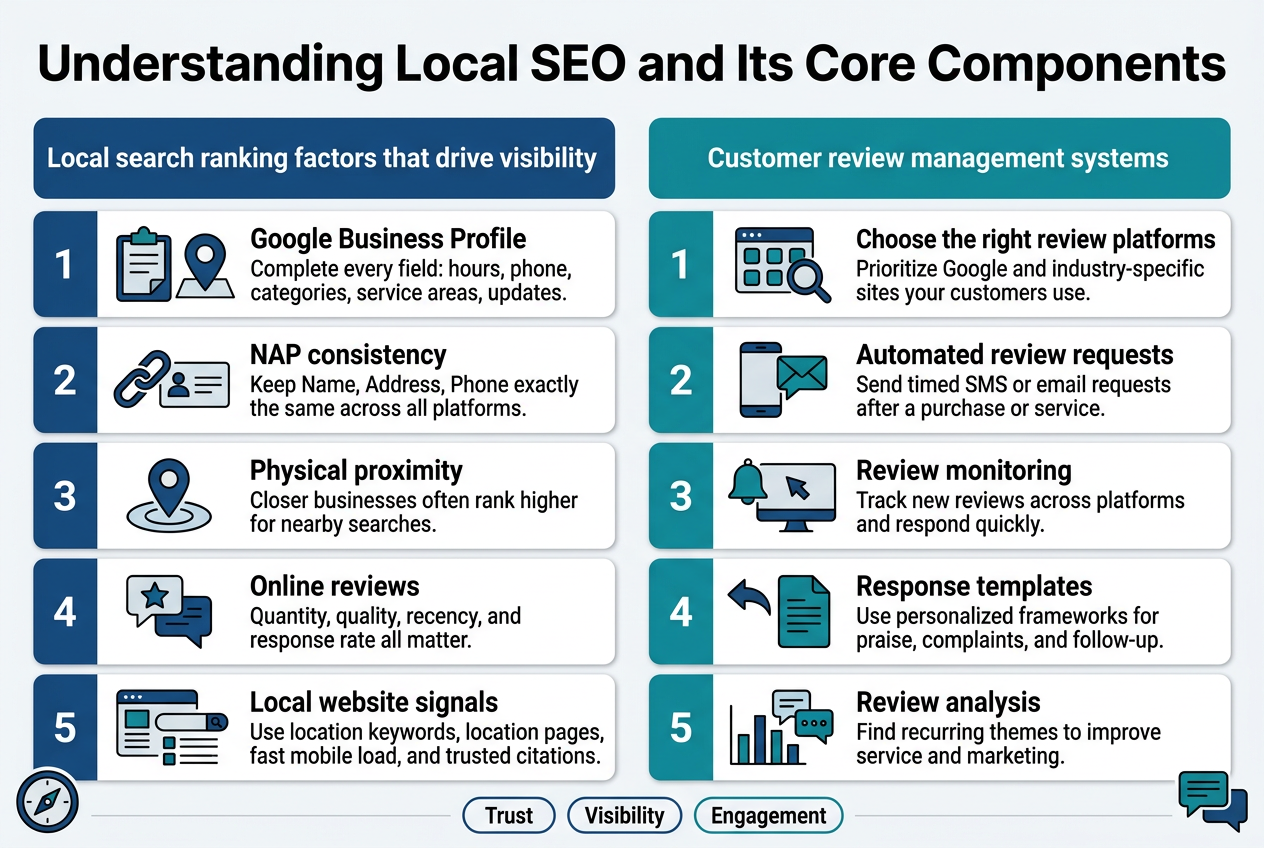
Local search ranking factors that drive visibility
Google evaluates dozens of signals when deciding which businesses appear in local search results. The most powerful factor is your Google Business Profile completeness and accuracy. This means filling out every available field, from your business hours and phone number to your service areas and business categories. Google rewards businesses that provide comprehensive, up-to-date information.
Your NAP consistency (Name, Address, Phone number) across all online platforms creates a foundation of trust with search engines. When your business information matches exactly on your website, Google Business Profile, Yelp, Facebook, and other directories, Google gains confidence in your legitimacy. Even small discrepancies, like using “Street” versus “St.” can weaken your local rankings.
Physical proximity to the searcher plays a major role in local results. If someone searches for “pizza near me” from downtown, businesses within a few blocks will typically outrank those across town, even if the distant business has better reviews. This proximity bias makes it essential to optimize for neighborhood-specific keywords.
Online reviews carry significant weight in local search algorithms. The quantity, quality, and recency of reviews all matter. A steady stream of fresh reviews signals an active, engaged business. Response rates to reviews also factor into rankings – businesses that regularly engage with customer feedback tend to perform better in local search results.
Your website’s local optimization includes embedding location-specific keywords naturally throughout your content, creating location pages for multiple service areas, and ensuring your site loads quickly on mobile devices. Local citations from reputable directories and industry-specific websites build additional authority signals that boost your search visibility.
Customer review management systems
Managing customer reviews requires a strategic approach that goes beyond simply hoping for positive feedback. Successful businesses implement systems to consistently generate, monitor, and respond to reviews across multiple platforms.
The foundation starts with identifying which review platforms matter most for your industry. While Google reviews carry the most weight for local search, industry-specific sites like Angie’s List for home services or TripAdvisor for hospitality can be equally important. Focus your efforts on platforms where your target customers actively search for businesses like yours.
Automated review generation systems help streamline the process of asking satisfied customers for feedback. These tools can send timed email or SMS requests after a purchase or service completion, making it easy for happy customers to leave reviews when their experience is fresh. The key is timing – ask too early and the customer hasn’t fully experienced your service; wait too long and they’ve forgotten about you.
Review monitoring tools track mentions across multiple platforms, alerting you to new reviews so you can respond promptly. Quick responses, especially to negative reviews, demonstrate your commitment to customer service and can actually improve your reputation. A thoughtful response to criticism often impresses potential customers more than perfect five-star ratings.
Response templates save time while maintaining personalization. Create frameworks for common scenarios – thanking customers for positive reviews, addressing specific complaints, or asking for more details about issues. Each response should feel genuine while efficiently addressing the reviewer’s concerns.
Review analysis helps identify recurring themes in customer feedback, highlighting both strengths to emphasize and weaknesses to address. This data becomes valuable for improving operations and crafting marketing messages that resonate with your audience.
Increased Online Visibility Within Your Target Market
Higher Rankings in Local Search Results
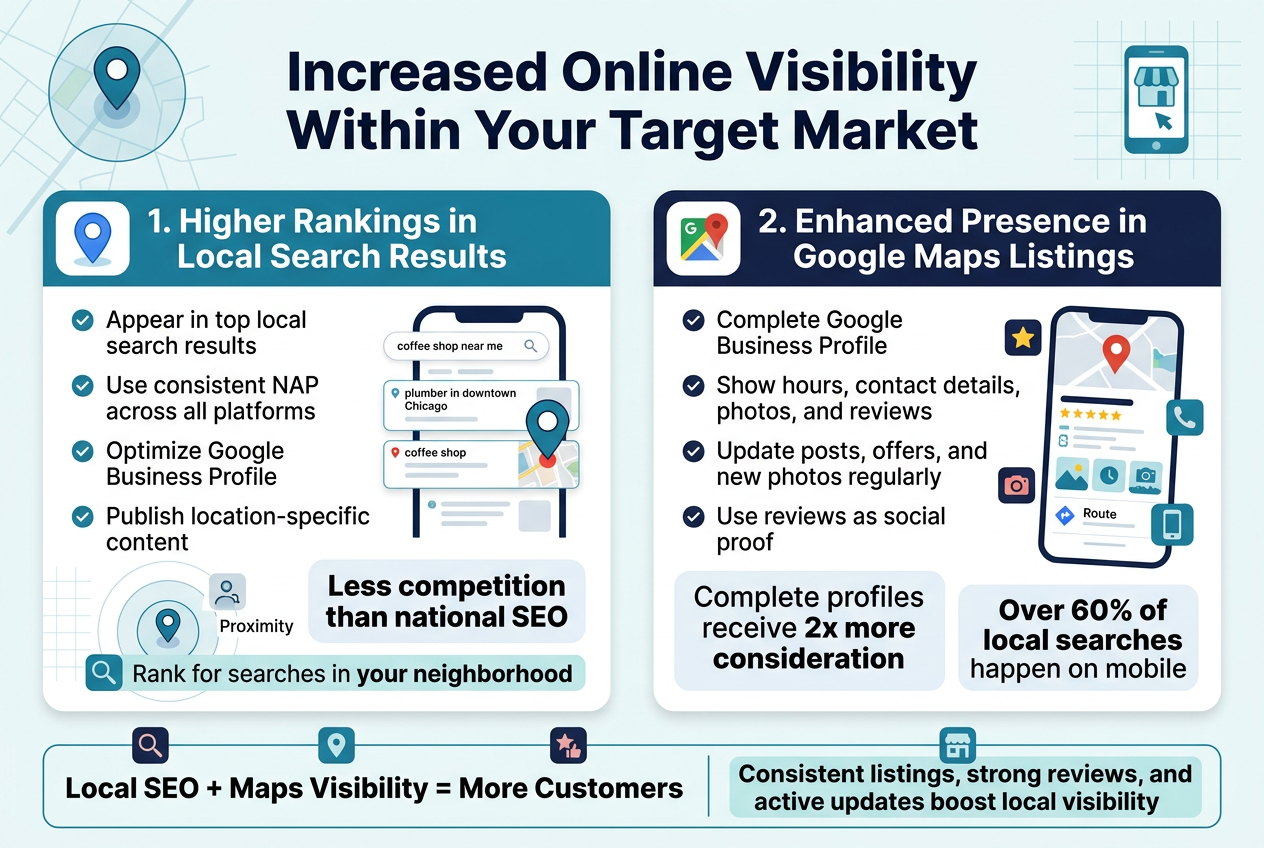
When potential customers search for businesses like yours in their area, you want to be among the first results they see. Local SEO dramatically improves your chances of appearing in those coveted top spots when people search for terms like “coffee shop near me” or “plumber in downtown Chicago.”
Search engines prioritize businesses that demonstrate strong local relevance through consistent NAP (Name, Address, Phone) information across all online platforms, positive customer reviews, and location-specific content. Small businesses that optimize their Google Business Profile, maintain accurate directory listings, and regularly publish location-focused content see significant improvements in their local search rankings.
The competition for local search visibility is often less intense than competing nationally, giving small businesses a real advantage. While you might struggle to rank for “best pizza restaurant” against major chains, you can realistically dominate searches for “best pizza restaurant in [your neighborhood]” with the right local SEO strategy.
Local search algorithms also factor in proximity to the searcher, meaning a well-optimized local business can outrank larger competitors simply by being closer to potential customers. This geographic advantage becomes particularly powerful when combined with strong reviews and consistent local citations.
Enhanced Presence in Google Maps Listings
Google Maps has become the default tool for local business discovery, with millions of people using it daily to find everything from restaurants to service providers. A strong presence in Google Maps listings can transform your business visibility and drive significant foot traffic.
Your Google Business Profile serves as your digital storefront on Maps, displaying crucial information like operating hours, contact details, photos, and customer reviews. Businesses with complete, optimized profiles receive 2x more consideration from potential customers compared to those with incomplete information.
Maps listings also feature prominently in mobile search results, often appearing above traditional website listings. This prime real estate becomes even more valuable considering that over 60% of local searches happen on mobile devices, with users typically looking for immediate solutions.
Regular updates to your Maps listing – including new photos, posts about special offers, and responses to customer reviews – signal to Google that your business is active and engaged. This activity boosts your visibility in local search results and helps you stand out from competitors who neglect their Maps presence.
The review system integrated into Maps listings provides social proof that influences customer decisions, making your enhanced Maps presence a powerful tool for converting searches into actual customers.
Mobile Search Optimization for On-the-Go Customers
Location-Based Mobile Advertising Effectiveness
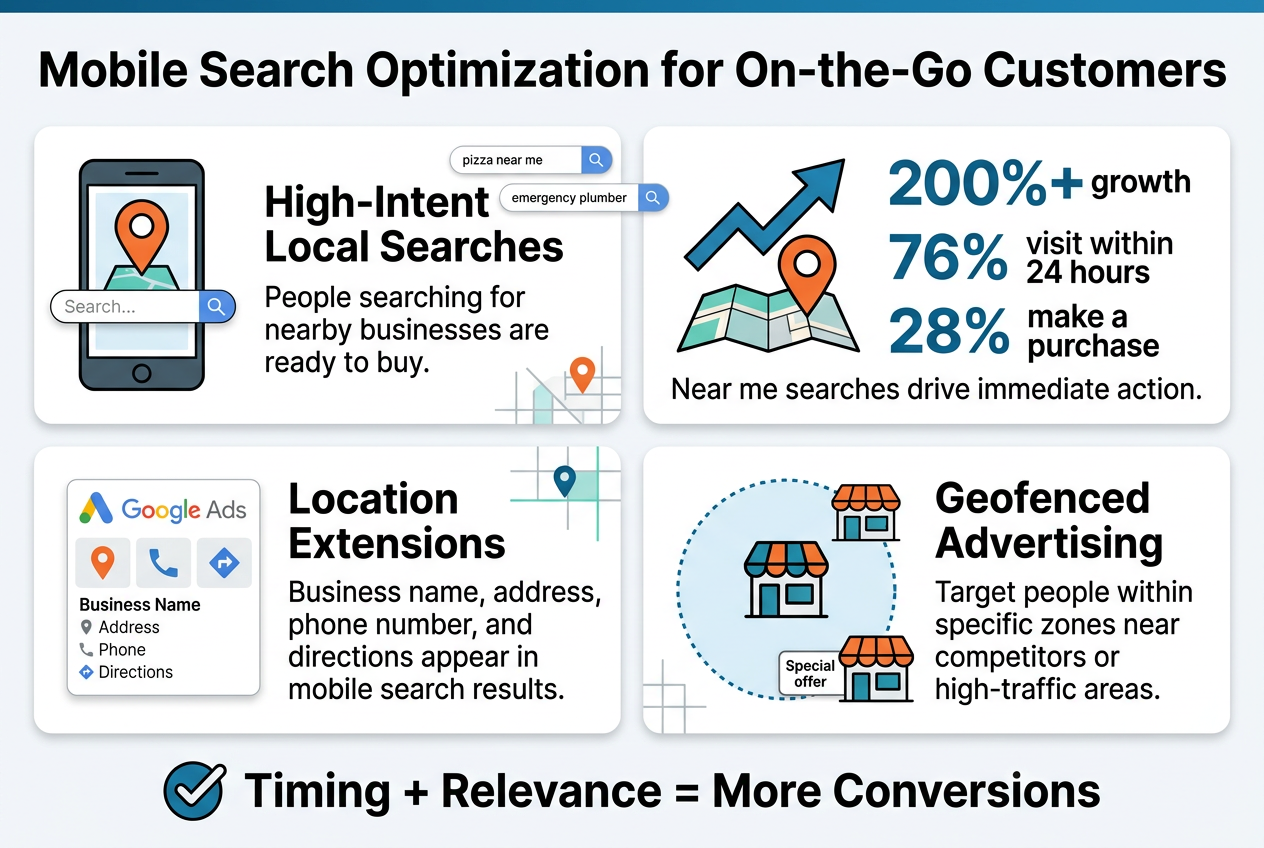
Mobile users searching for nearby businesses are incredibly valuable customers. When someone pulls out their phone to find “pizza near me” or “emergency plumber,” they’re not just browsing – they’re ready to buy. Location-based mobile advertising taps into this high-intent behavior, delivering your business directly to customers when they need you most.
The numbers tell an impressive story. Mobile searches with “near me” have grown by over 200% in recent years, and 76% of people who search for something nearby visit a business within 24 hours. Even better, 28% of those searches result in an actual purchase. This immediate action makes mobile advertising campaigns significantly more effective than traditional desktop approaches.
Google Ads location extensions work particularly well for small businesses. When your ad appears on mobile searches, potential customers see your business name, address, phone number, and even directions – all within the search results. This seamless experience removes friction from the customer journey and drives foot traffic directly to your door.
Small businesses often see remarkable returns from geofenced advertising campaigns. By setting up virtual boundaries around competitor locations or high-traffic areas, you can deliver targeted ads to potential customers in those specific zones. A local coffee shop might target people within a two-block radius of competing cafes, offering a discount to entice them to try something new.
The key lies in timing and relevance. Mobile advertising works best when it matches user intent with immediate solutions, creating a perfect storm for conversion. Related Article
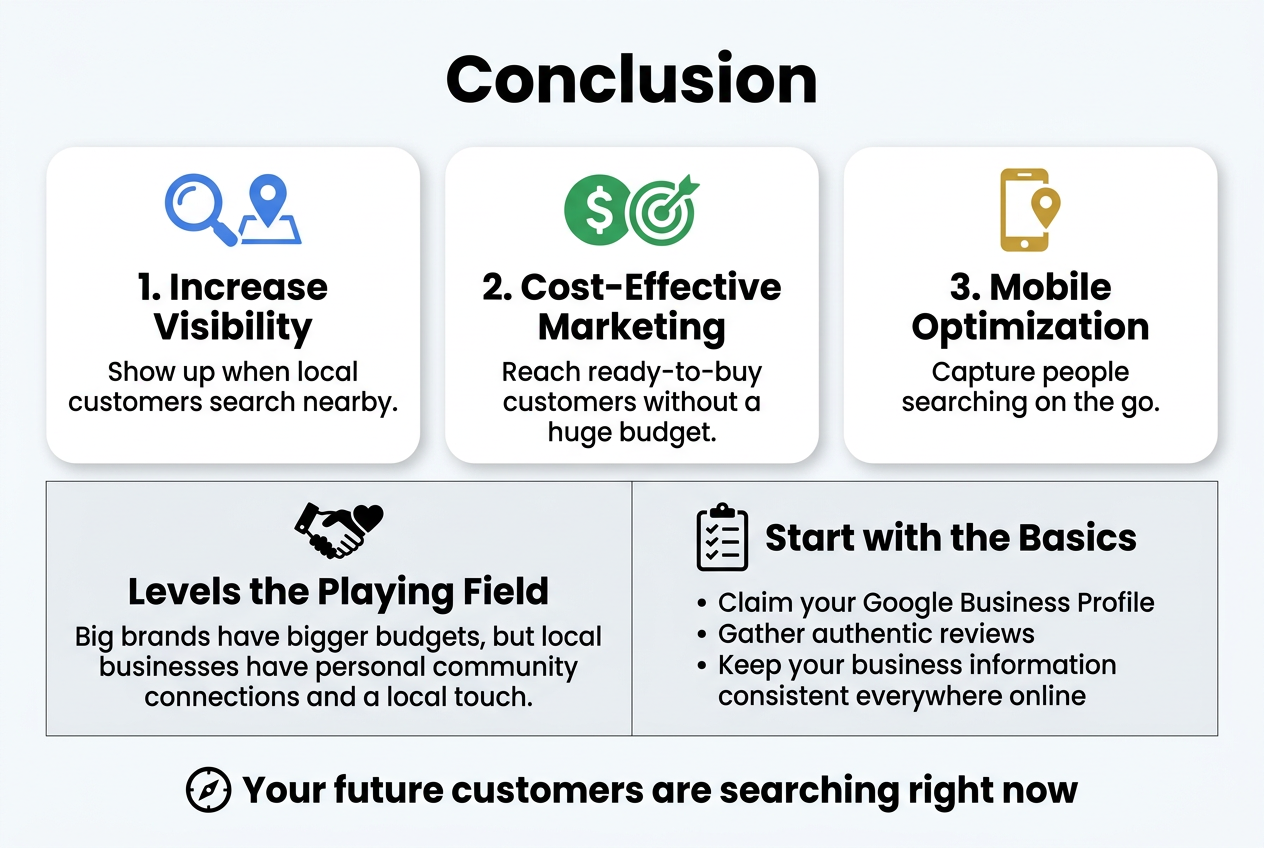
Local SEO isn’t just another marketing buzzword – it’s the secret weapon that helps small businesses compete with the big players. By focusing on your immediate community and optimizing for local searches, you’re putting your business right in front of people who are ready to buy. The combination of increased visibility, cost-effective marketing, and mobile optimization creates a powerful foundation that drives real customers through your doors.
The best part about local SEO is that it levels the playing field. While massive corporations might have bigger budgets, they can’t match your personal connection to the community or your ability to provide that local, personalized touch customers crave. Start with the basics – claim your Google Business Profile, gather authentic reviews, and make sure your business information is consistent everywhere online. Your future customers are searching for businesses like yours right now, and local SEO makes sure they find you first.

One Response